
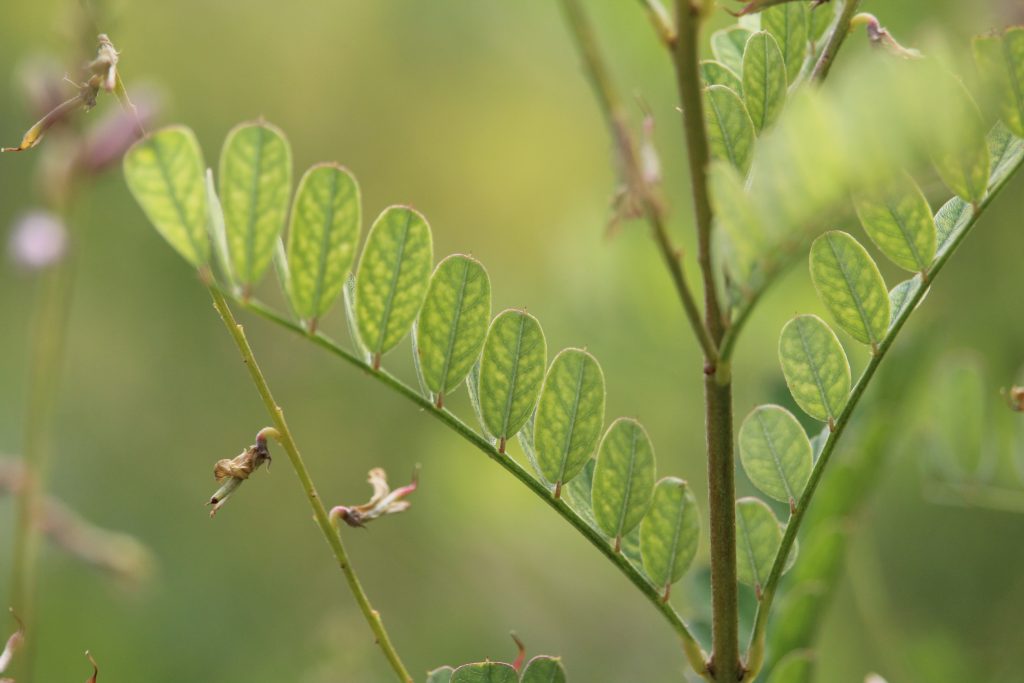
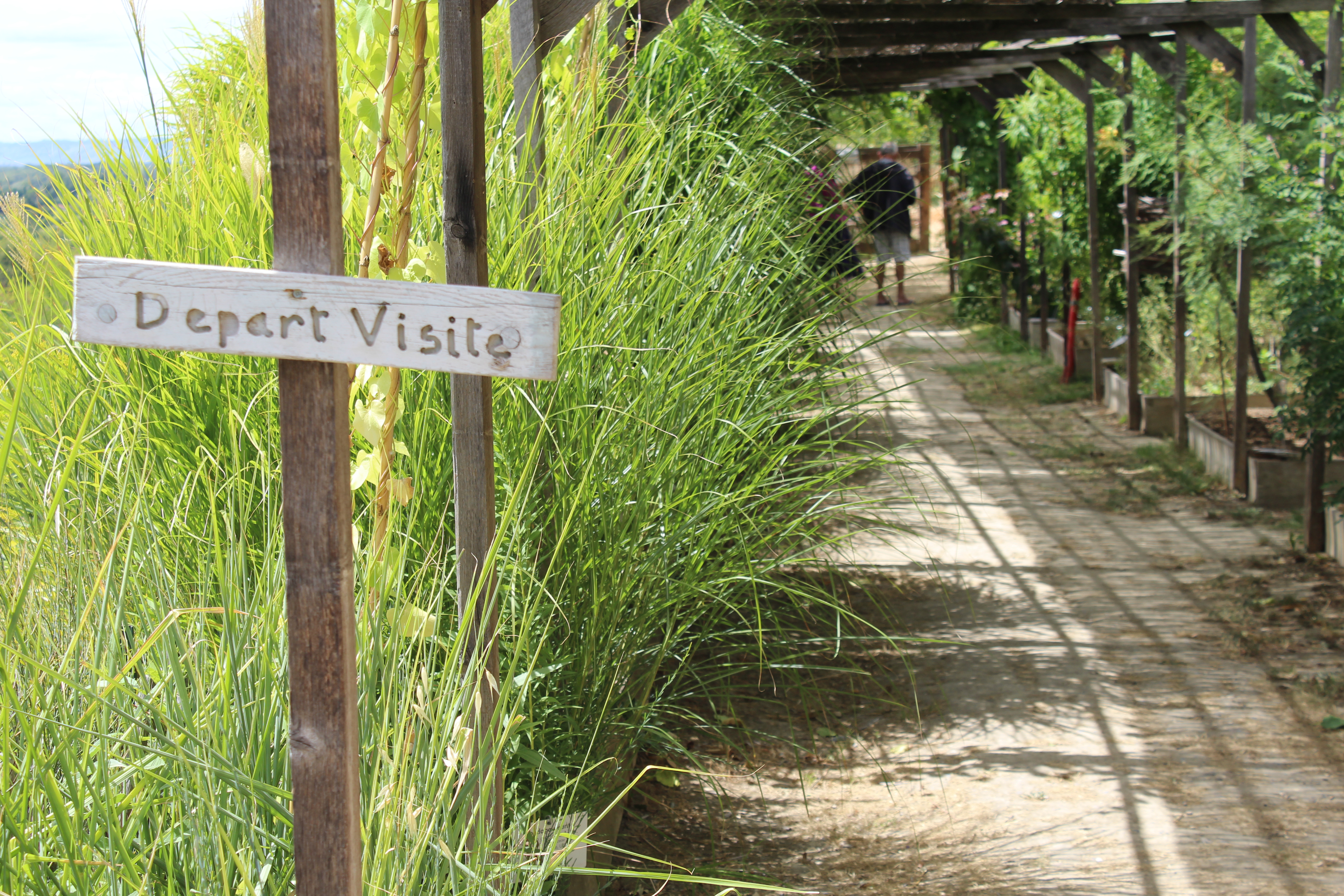
Perched atop a cliff, the village of Lauris is home to botanical wonders that a budding dyer could not miss.
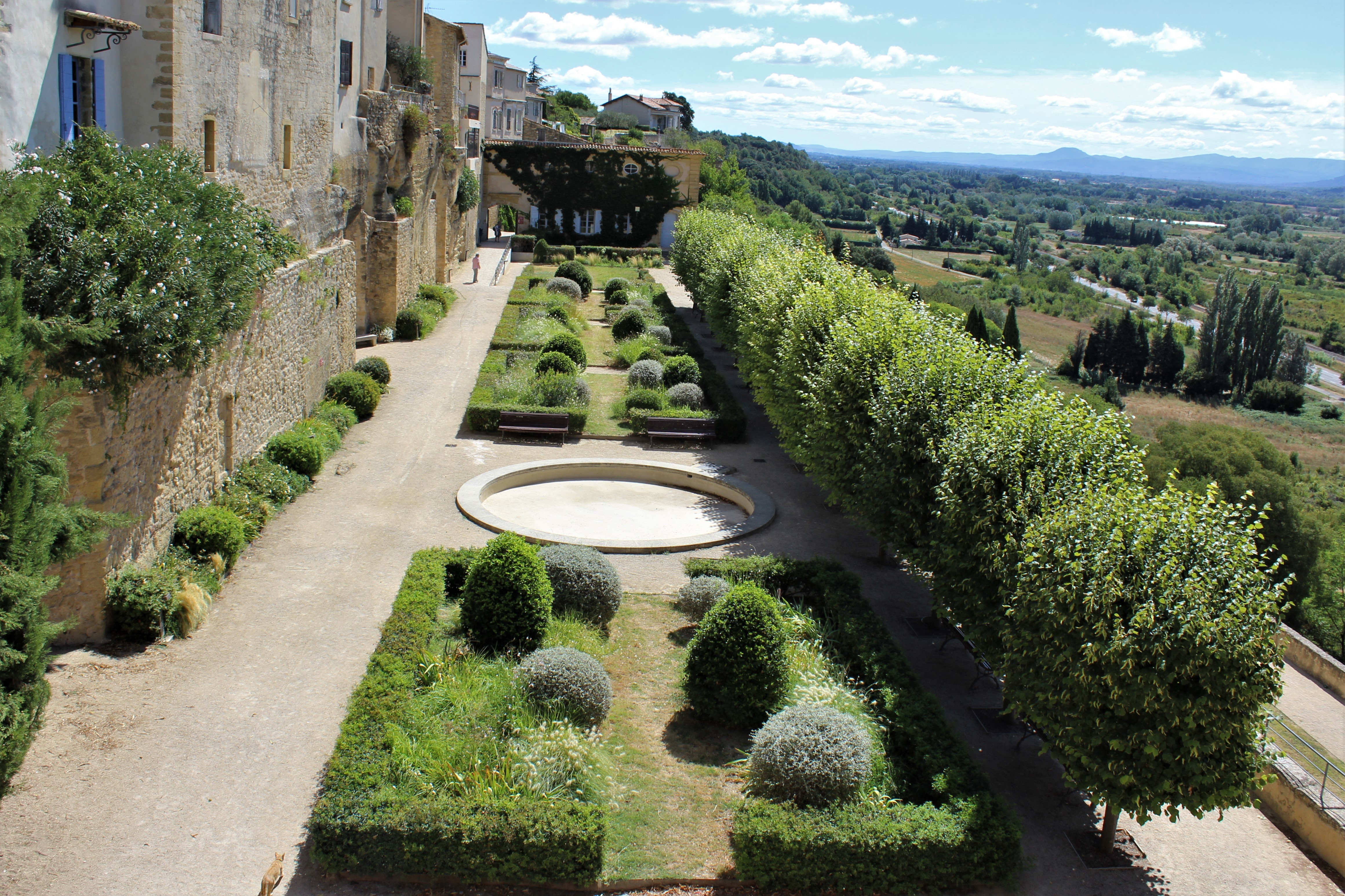
I had the pleasure of visiting the conservatory garden of dye plants of the Couleur Garance association (a big thank you to my sister for lending me her car!).
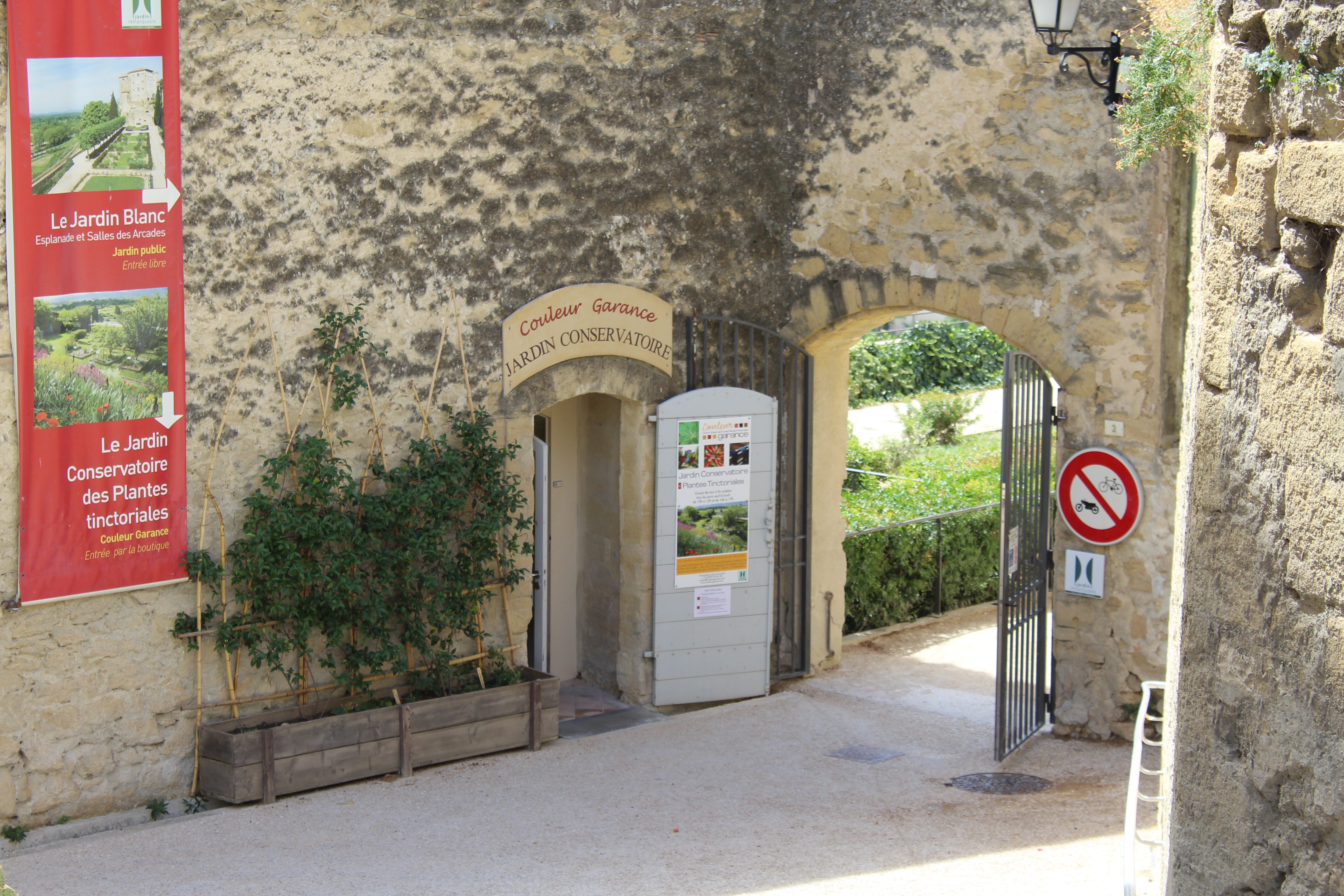
It was impossible for me to pass so close to this place without visiting it. Its existence seems magical when you discover it. It’s a botanical garden, yes… but specializing in dyes!

The idea came from Michel Garcia, a renowned specialist in the world of plant-based color whose work is vast and precious. In 1998, he founded the Couleur Garance association in the Luberon, a region whose history is colored by the ochres of its earth, the vermilion of its cochineal, and the red of its madder… Beyond a desire to transmit and promote plant-based color, the association was entrusted with managing part of the terraces of the Château de Lauris in 2002, where more than 250 plant species now flourish to satisfy the pleasure and curiosity of visitors.
This garden is a wonderful idea because it pays tribute to the living origins of color, allows one to grasp the high dyeing potential of plants, and offers a pleasant moment in an intimate and peaceful setting.

The garden is organized into 3 main parts: The Science of Plant Colors, New Research Directions, and Dyes of the World. Each of these parts is divided into squares containing plants grouped according to a specific theme. Education is one of the reasons for this garden’s existence, in case you had any doubt!
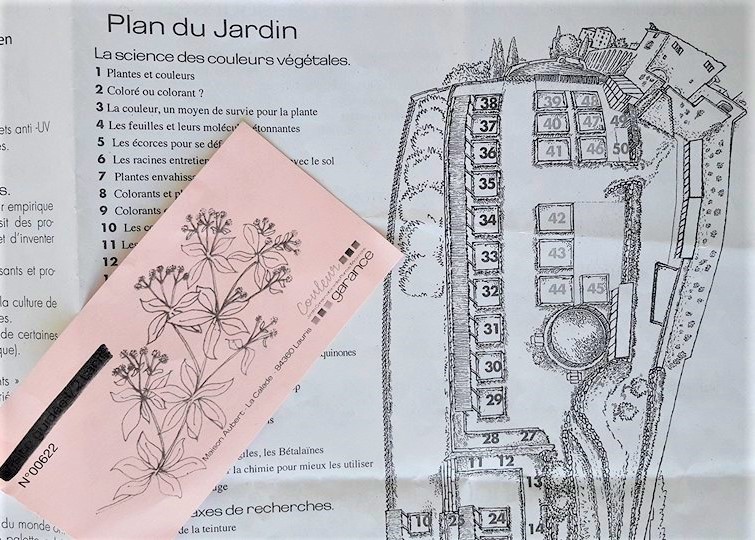
For my part, I suggest a summary of our visit through the lens of color—the kind obtained from plants. It is worth noting that it is not always the most colorful flowers and plants that are the most coloring! You will see this particularly with the fuchsia section.
I will make sure to keep textile use in mind, although the garden presents color in many other aspects: cosmetic, food, medical, or strictly botanical—notably by teaching us that dyes are present in the plant to ensure its survival and/or protection, and not to help us dye our fibers.
All the photos you will see in this article are ones I took during the afternoon spent at the garden!
The elusive blue
A color with strong symbolism, blue relates to the divine (the Virgin Mary’s cloak), royalty, intelligence, peace, contemplation, water, the sky, and infinity. Blue is very present in our daily lives, but it is a very particular color that, in a way, does not exist as such in nature. The sky is blue due to the scattering of light in the atmosphere, and the blue feathers of birds contain no blue pigment but are also an effect of light on keratin… Blue does exist in various forms (like in berries), but their fastness (to washing and light) is not great.
The plants used for textile dyeing are Woad, Knotweed, and the Indigo plant. They contain the dyes indican and isatan, both necessary to obtain indigo. These two substances go through a process of maceration and then oxygenation before they can color the fiber blue. Setting up an indigo vat is quite a story; I will go into detail on another occasion.
Dyer’s Woad or Guède is a plant that was widely cultivated in France, particularly in the Toulouse region. It can be found almost everywhere in the country, but to obtain optimal blue, the plant needs 14 consecutive sunny days of exposure. The south of France is therefore more suitable for its cultivation.

The plant, a relative of the cabbage family, produces yellow flowers, but it is the leaves that are used for dyeing.
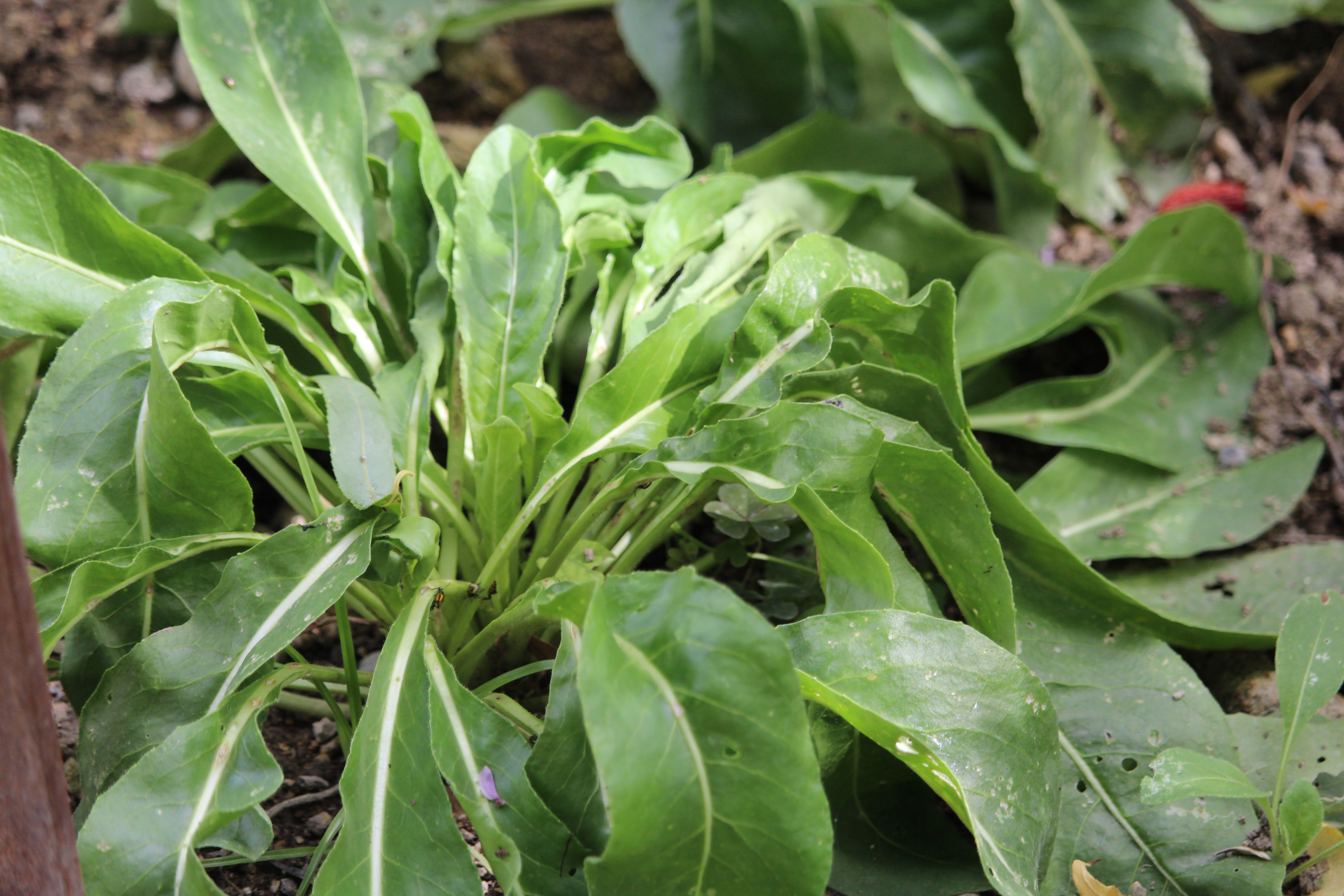
Today, the plant is not used much to obtain blue because it is less concentrated in indigotin than the Indigo plant from Asia. However, the Bleu de Lectoure company in the Gers has revitalized this plant, which once brought prosperity to the “Pays de Cocagne” (which stretches from Toulouse to Carcassonne). The term cocagne refers to the small balls of Woad marketed in the form of shells.

Dyer’s Knotweed or Japanese Indigo is found in China and Japan.


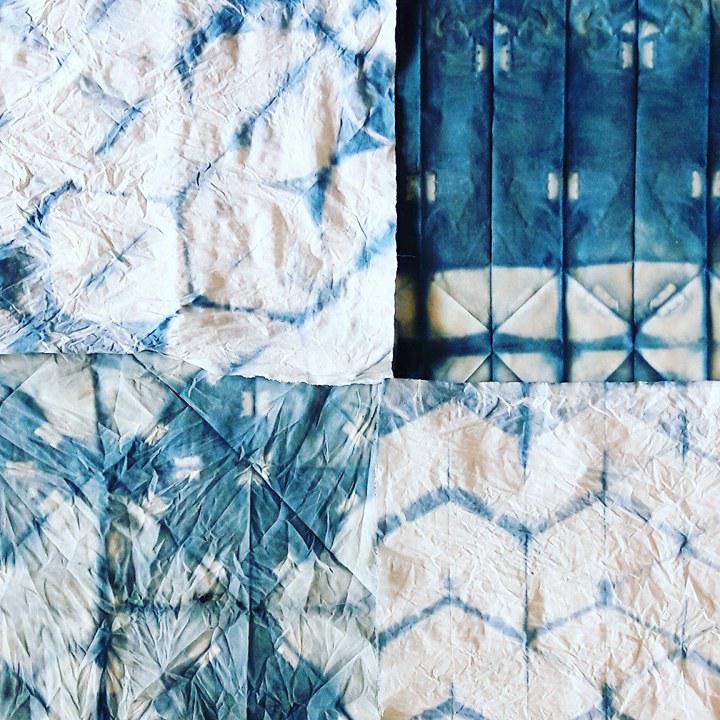
Indigo dyeing is traditionally used for the Shibori technique. This is a resist dyeing method involving folding and tying the fabric. Madder or beetroot can be used, but this is rarer.
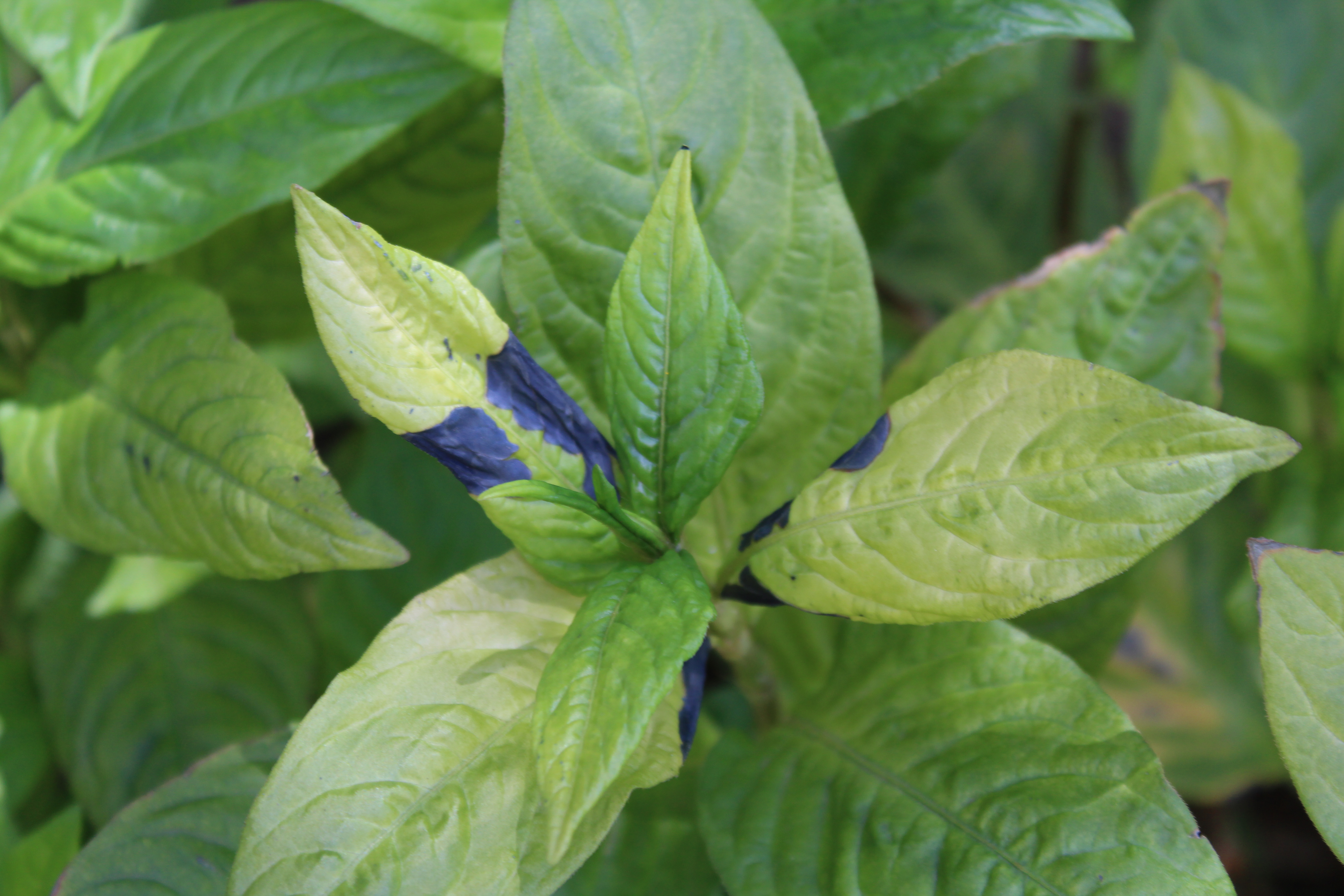
Dyer’s Indigo is a legume that grows in the tropical regions of the northern hemisphere.
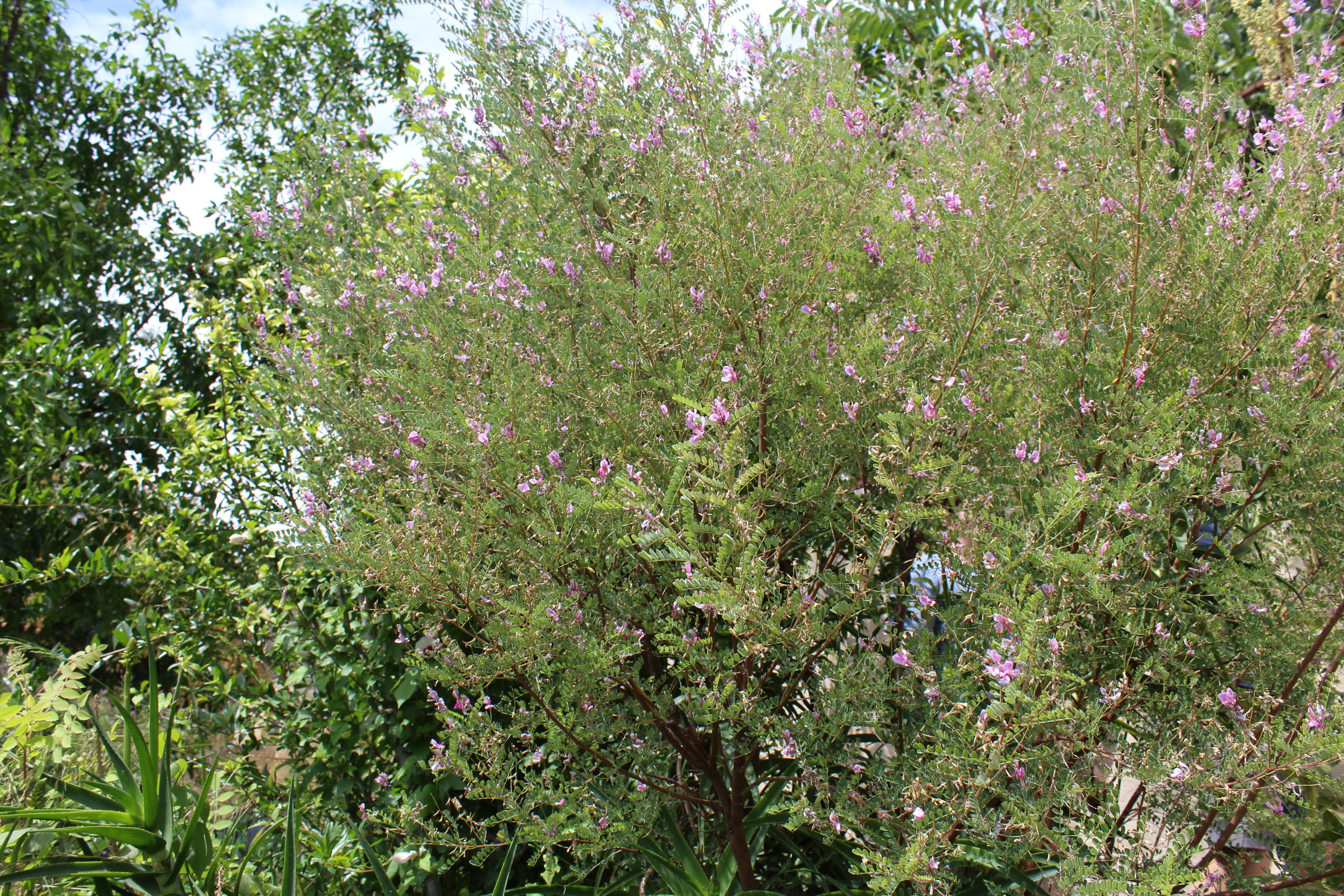
The Indigo plant began to overshadow Woad starting in the 17th century, even though French blue had been protected by Henri IV. He had banned the use of indigo to keep the important Woad trade afloat.
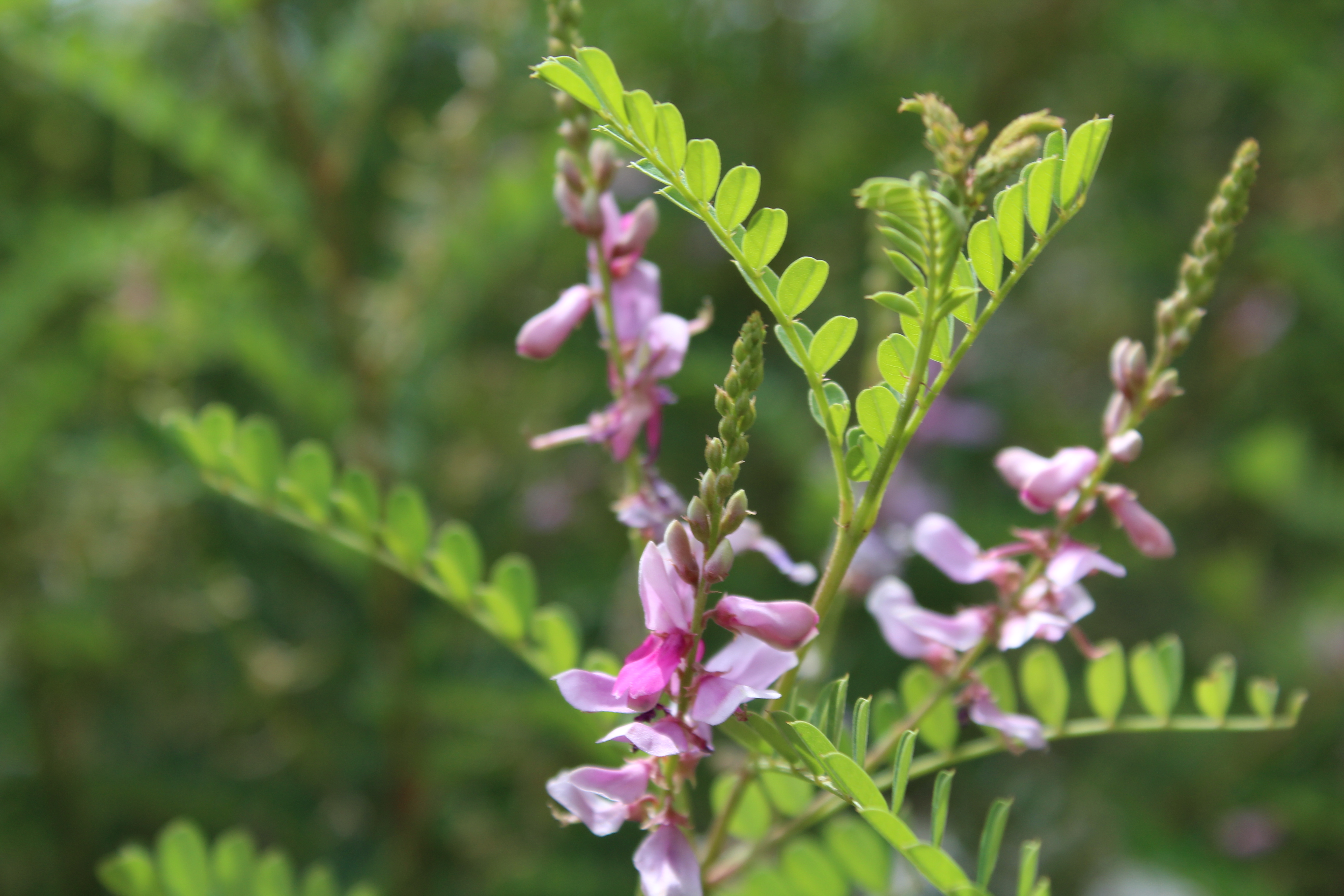
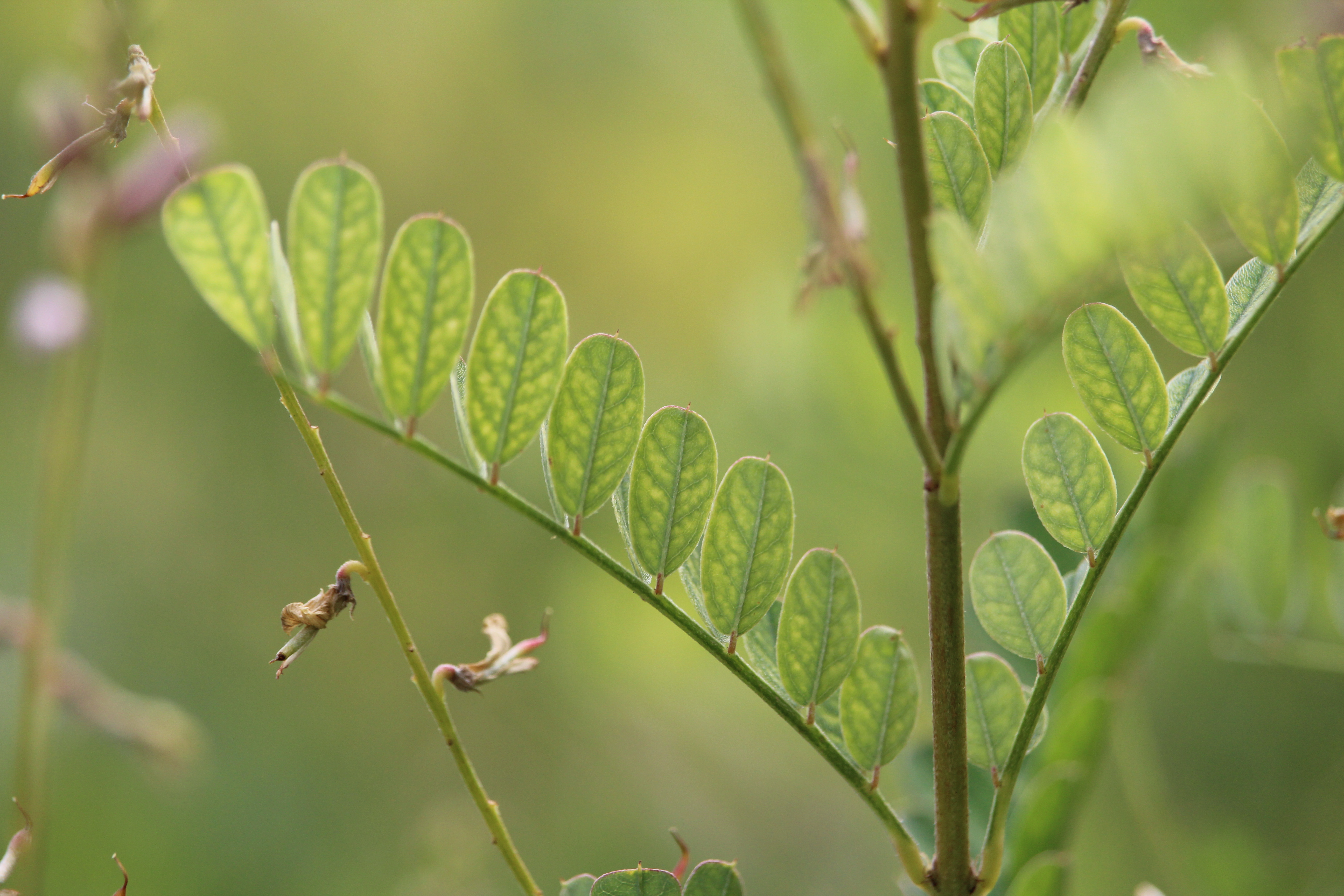
It was Louis XV who abolished protectionism, and Indigo took the lead. Woad had one last resurgence with Napoleon’s Continental Blockade. Then the Indigo plant regained dominance with free trade until it suffered its own decline with the arrival of synthetic dyes.
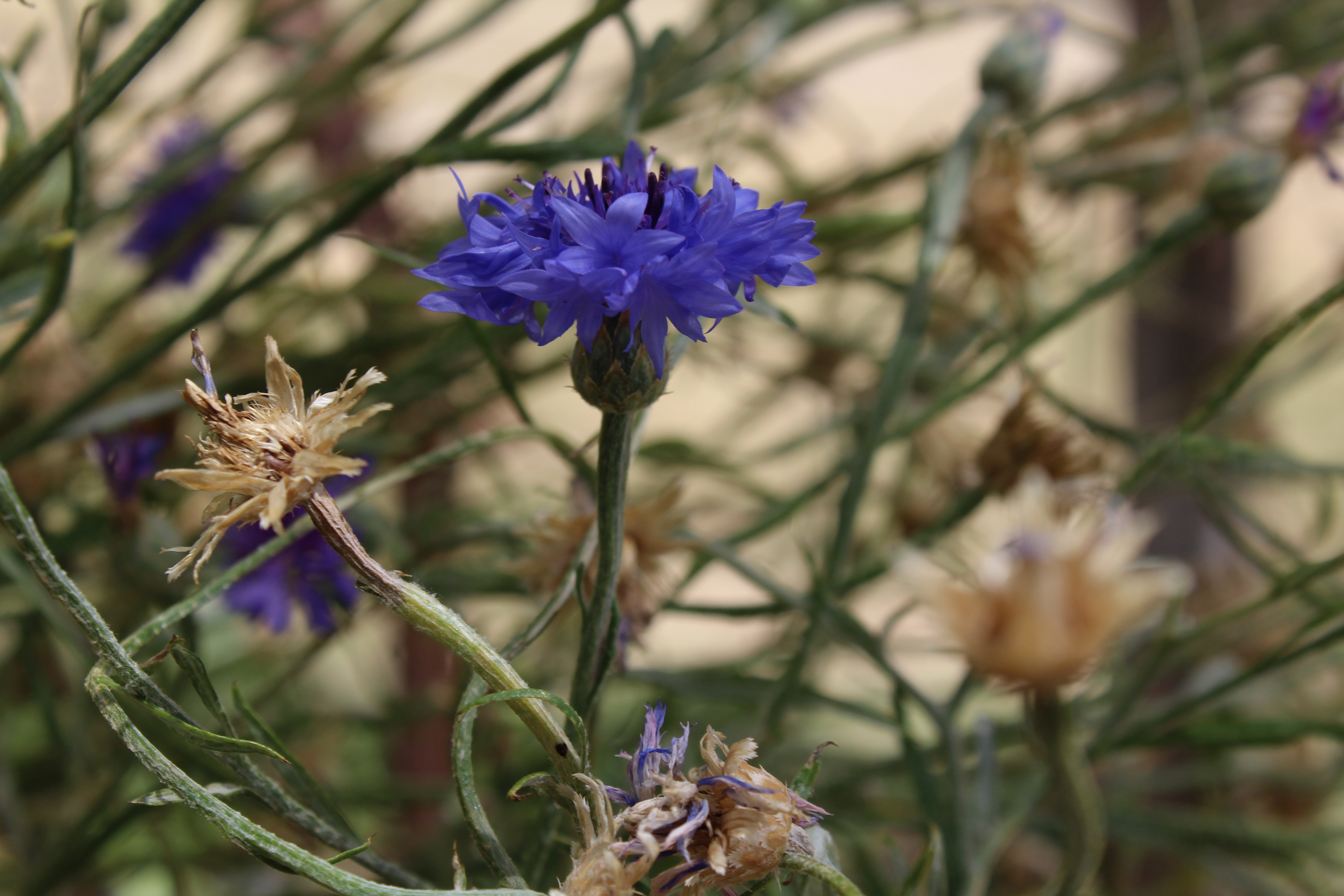
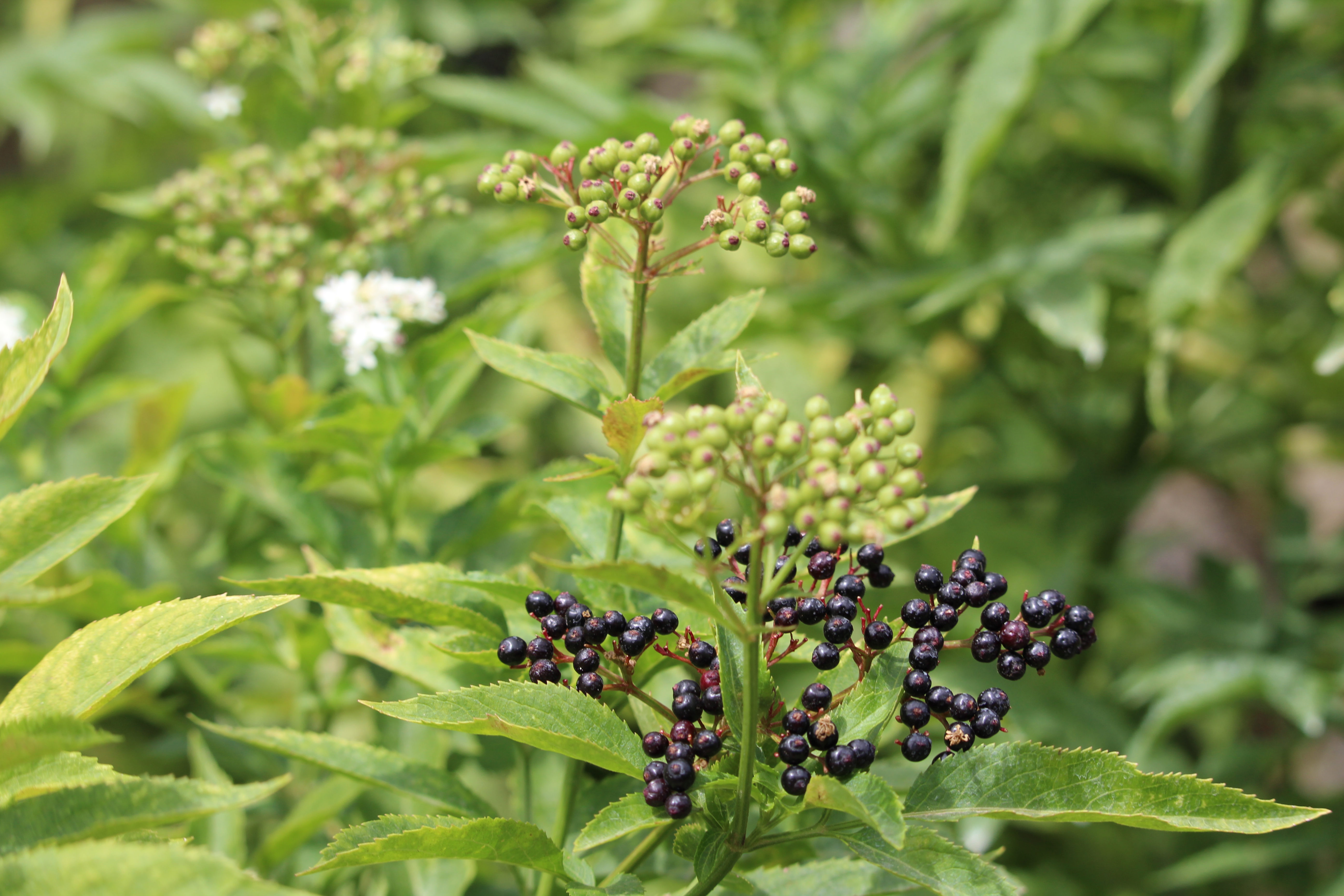
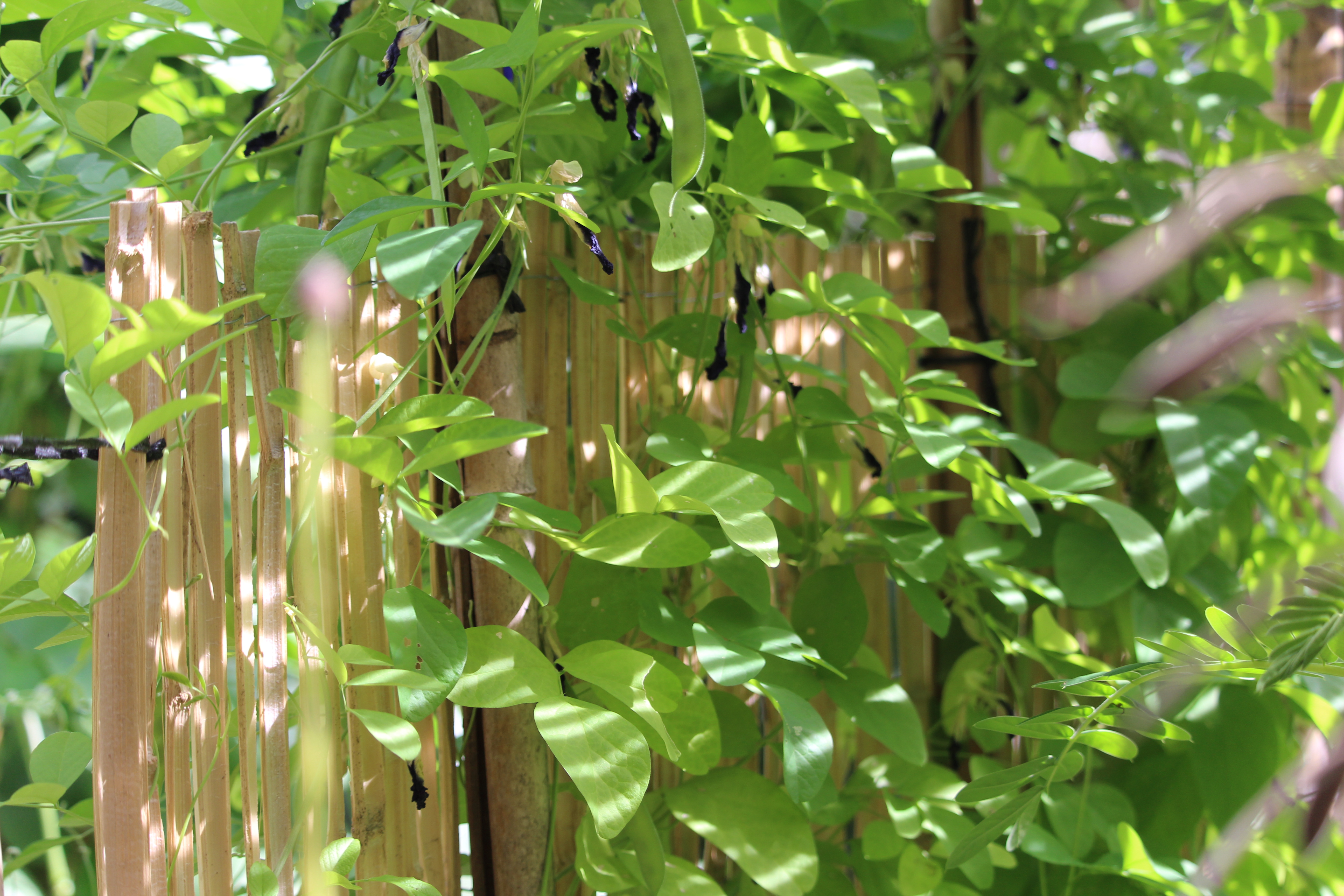
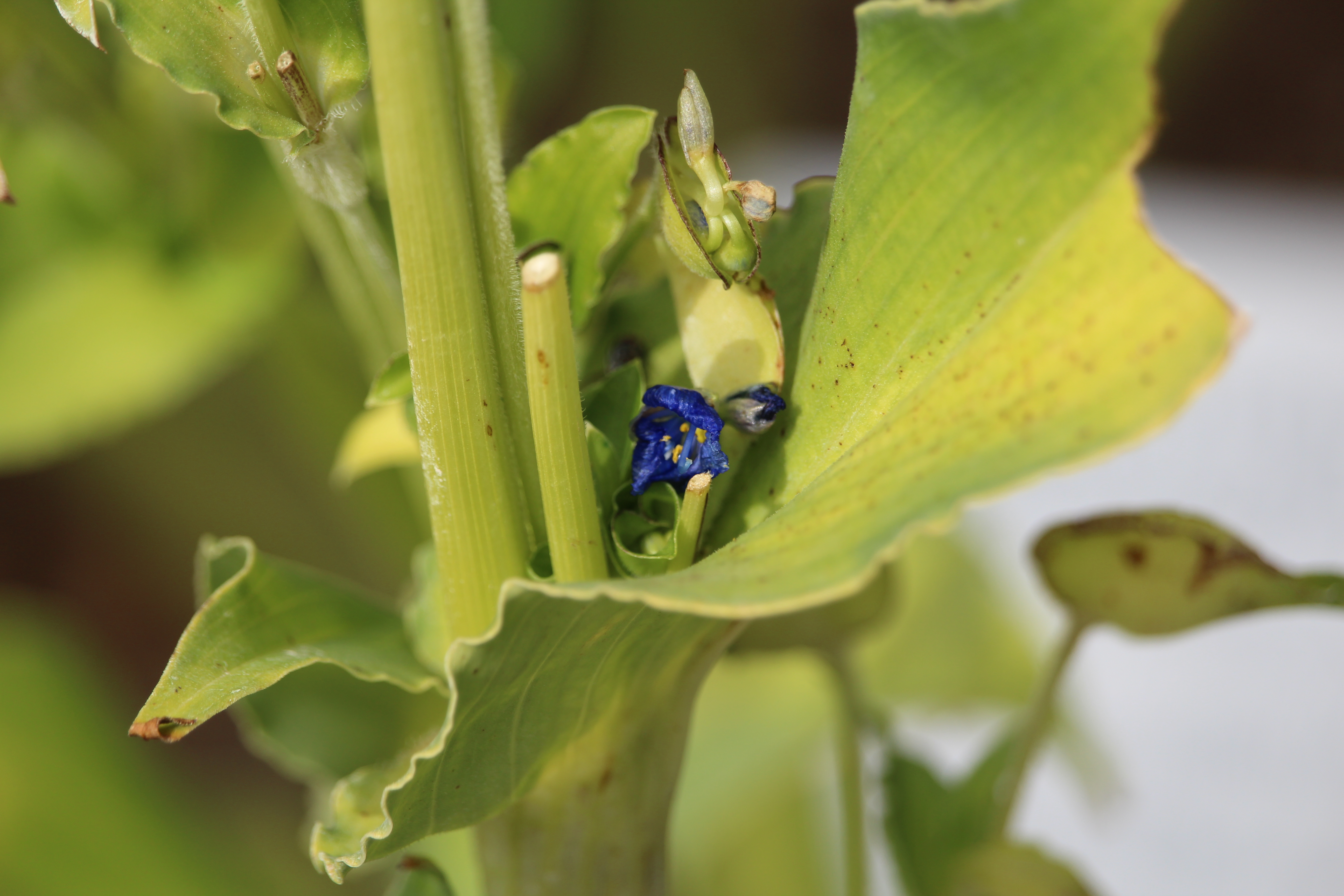
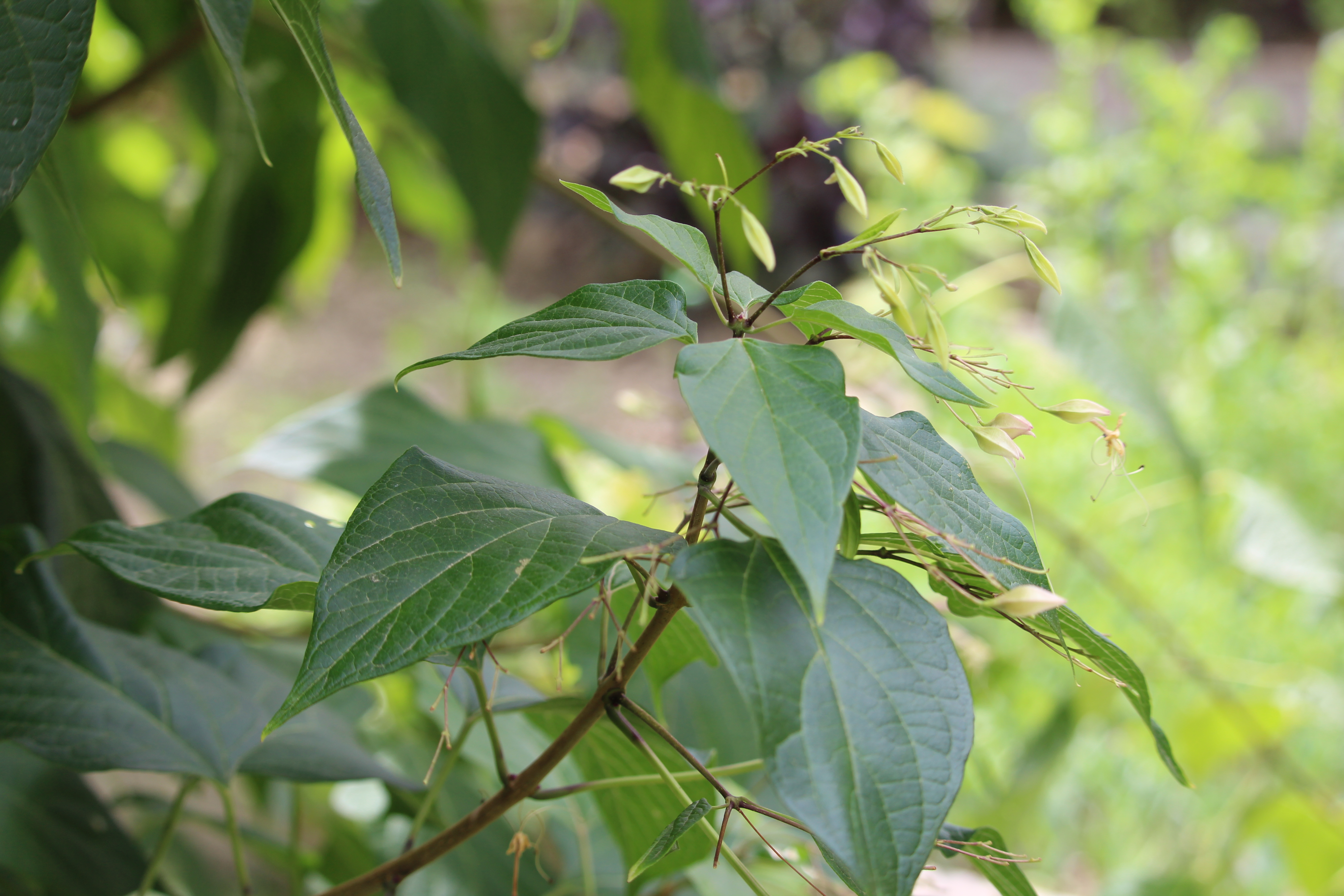
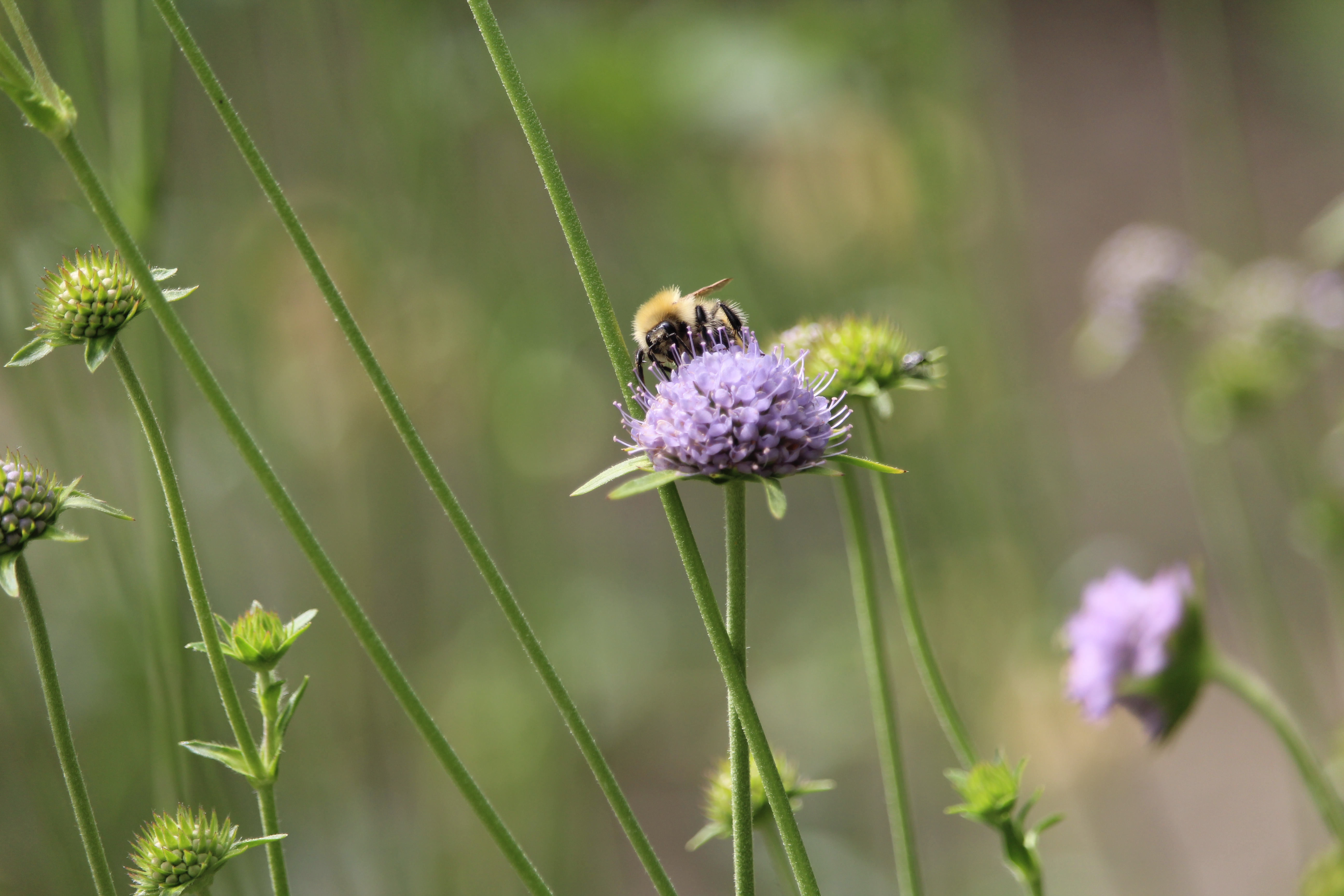
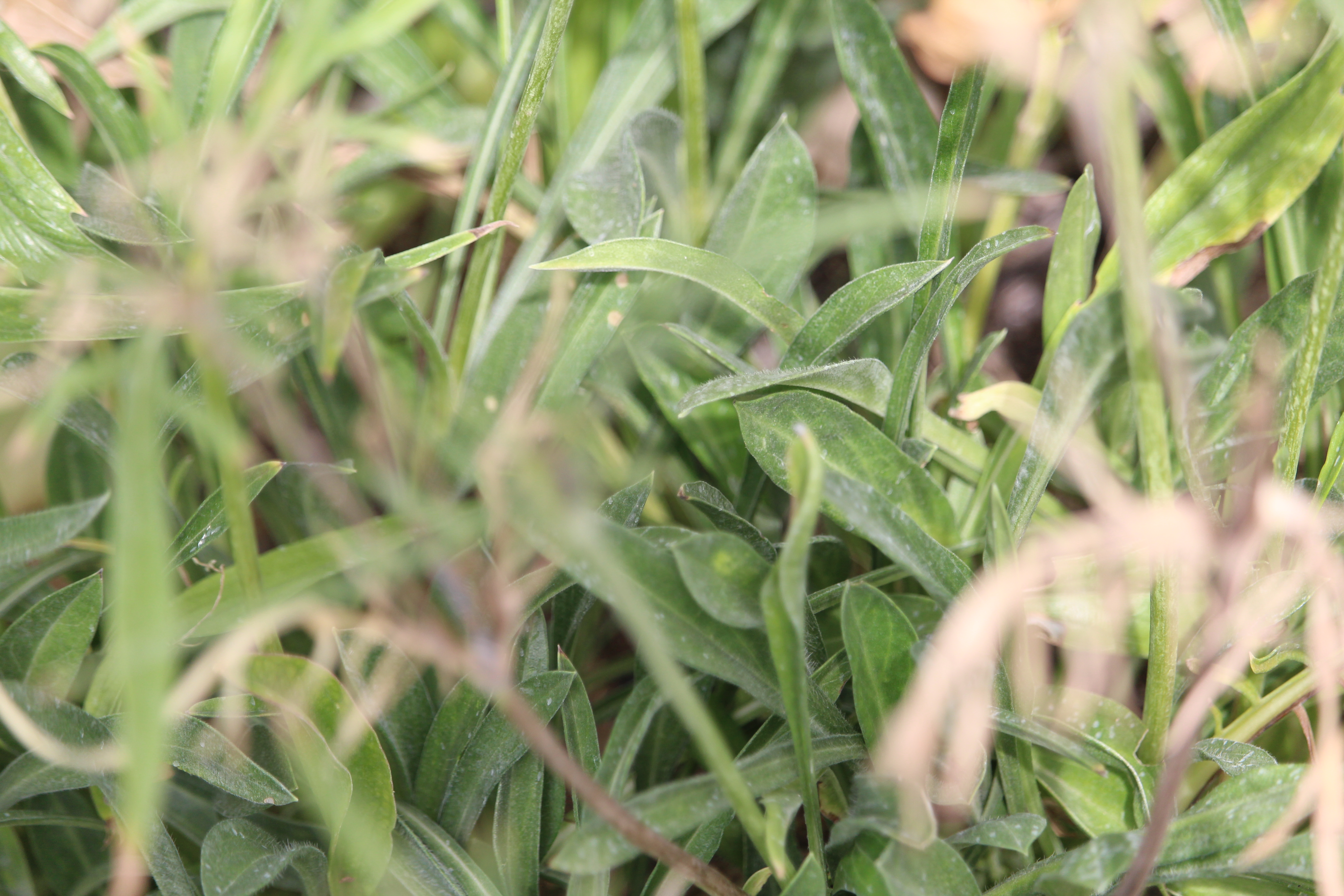
While these 3 plants are the standards for producing natural blues, the garden presents other avenues for obtaining this shade. Nevertheless, current knowledge regarding these “other” blues yields fragile results in terms of fastness. Here are a few specimens:
Yellow at the heart of many plants
A joyful, radiant color, it is associated with the sun and gold. However, it has seen darker times: associated with Judas, it then symbolized lies and betrayal. In Asia, the color evokes the sacred (China) or humility among Buddhists.
The plant world is full of yellow dyes: flavonoids. They produce yellows that are fast to both light and washing.
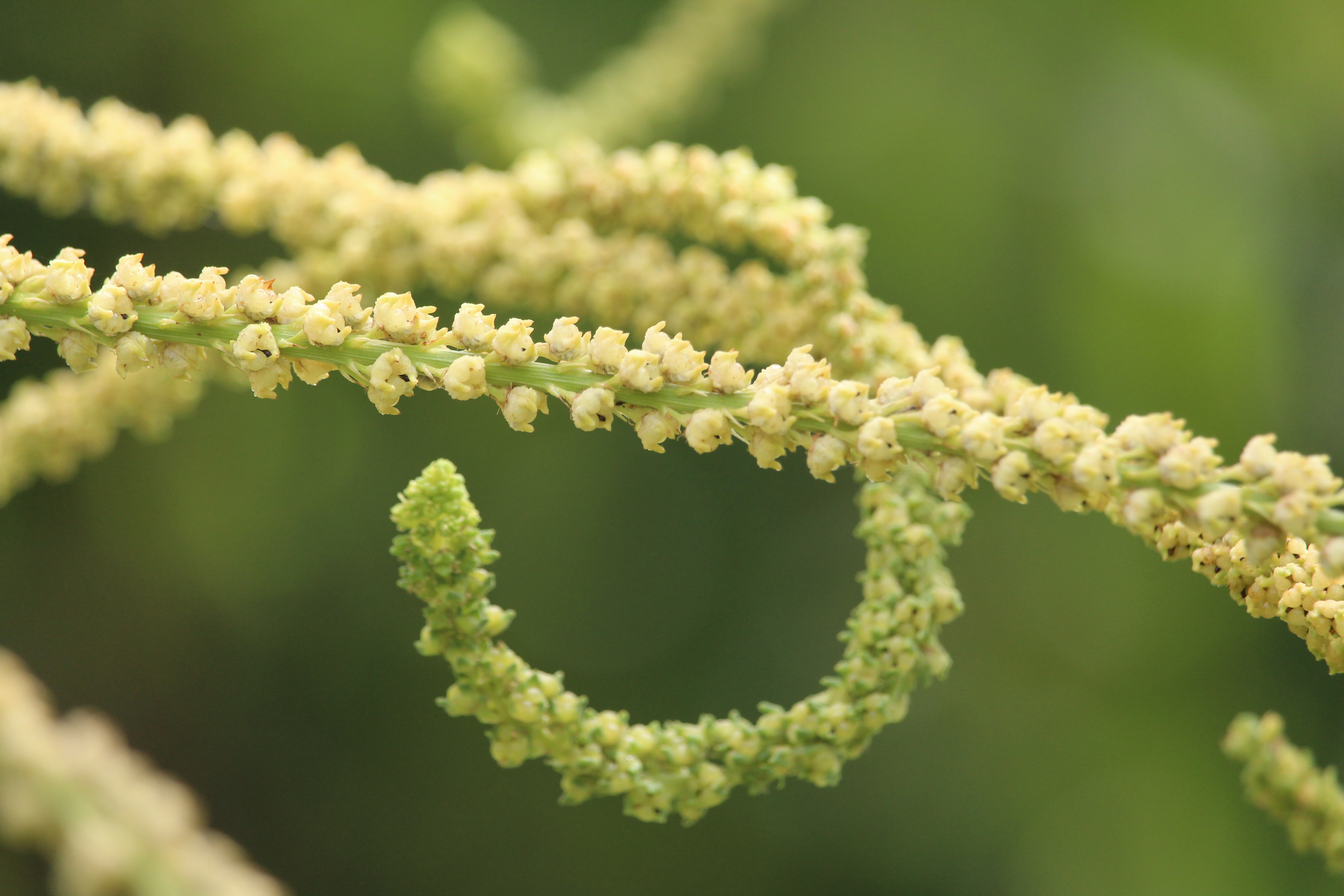
Dyer’s Weld or Dyer’s Rocket was a plant long cultivated for dyeing in Europe. Its yellow was highly prized. Today, it is rarer. It can be found in the wild, particularly in the south of France, as it likes dry soils. It’s best to check its status before picking it in nature.

This biennial plant can be used for dyeing in the second year of planting. Depending on the additive used, you can also obtain an olive green with copper or a bronze green with iron. Generally, only the fruiting stems—the top of the plant—are taken.
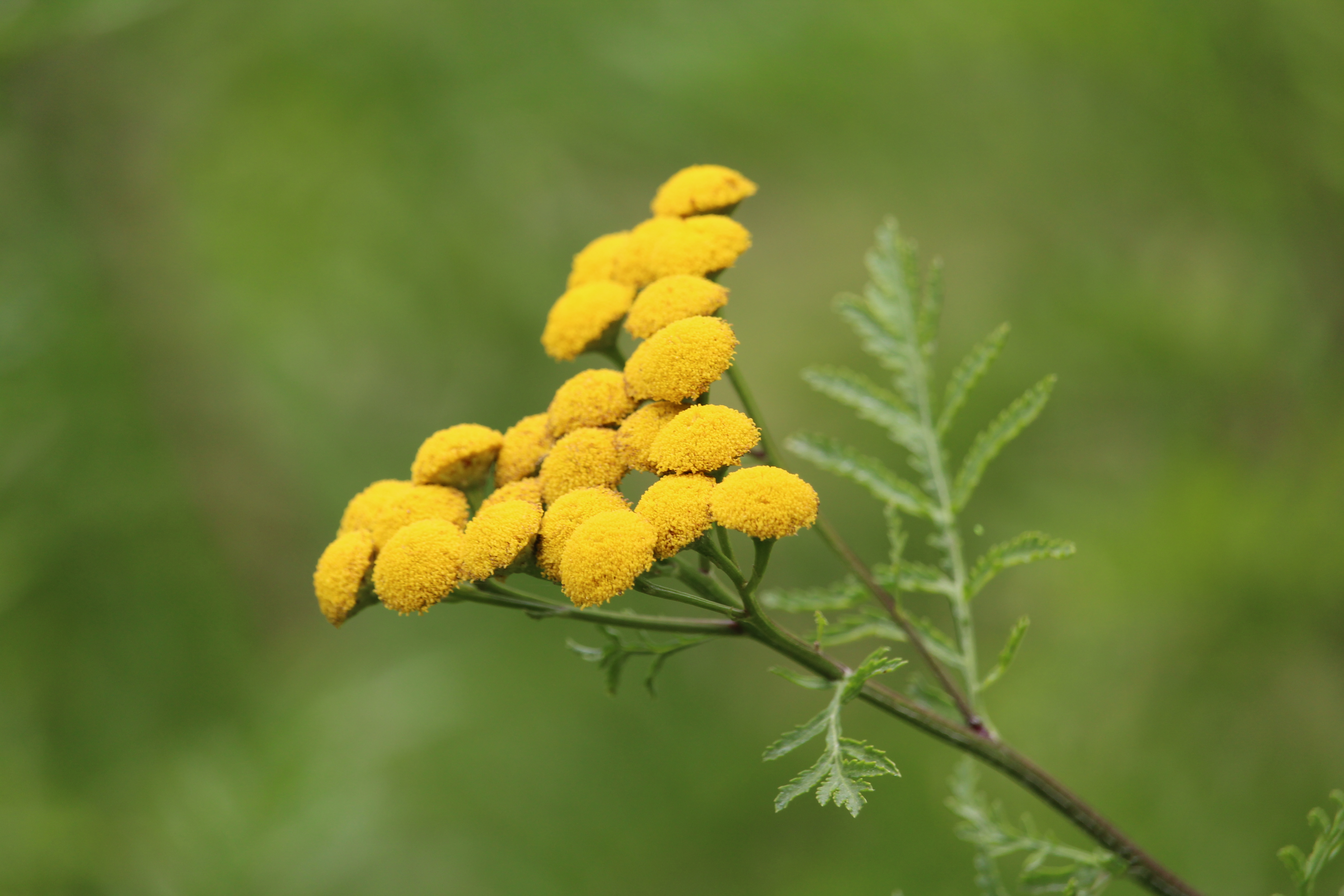
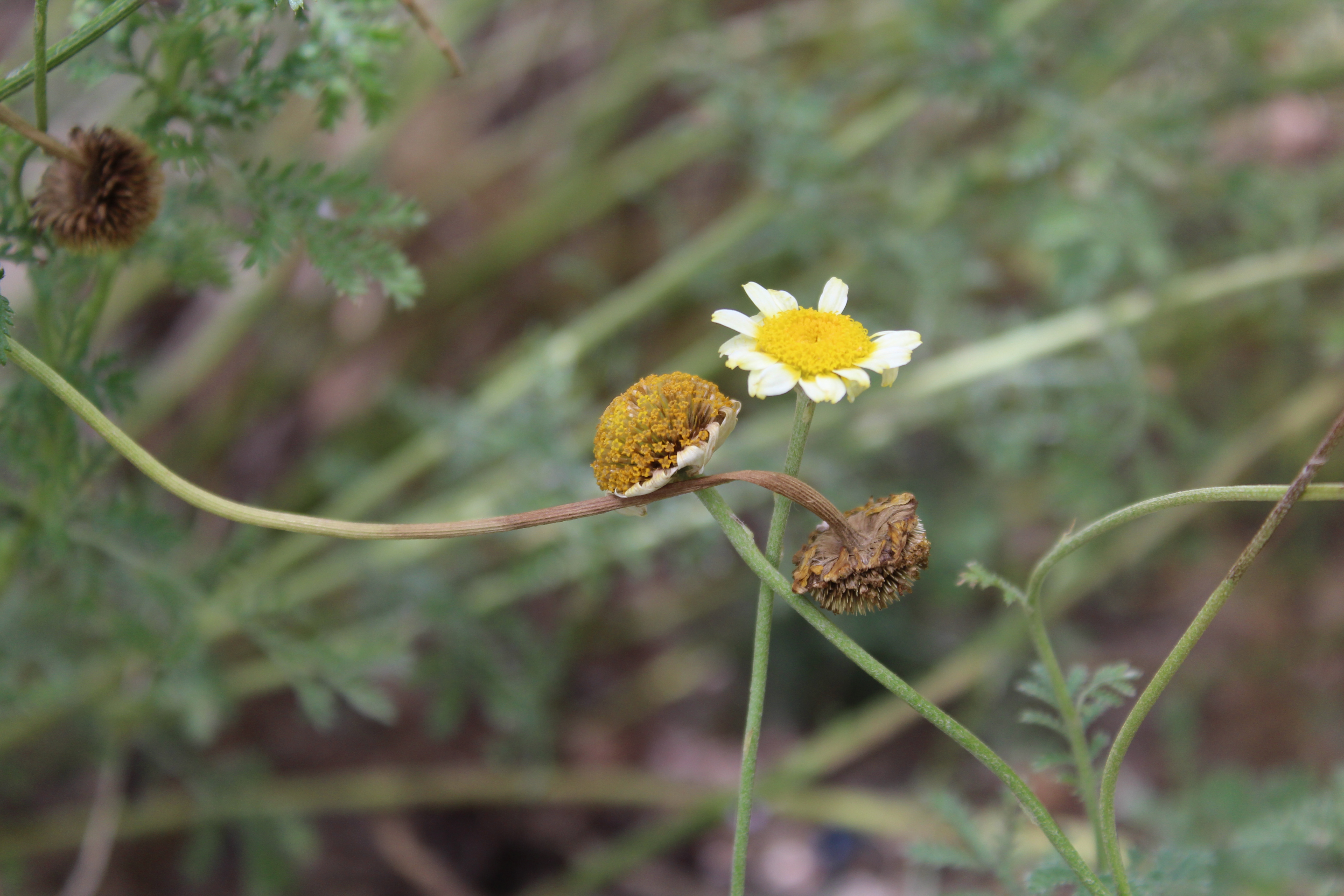
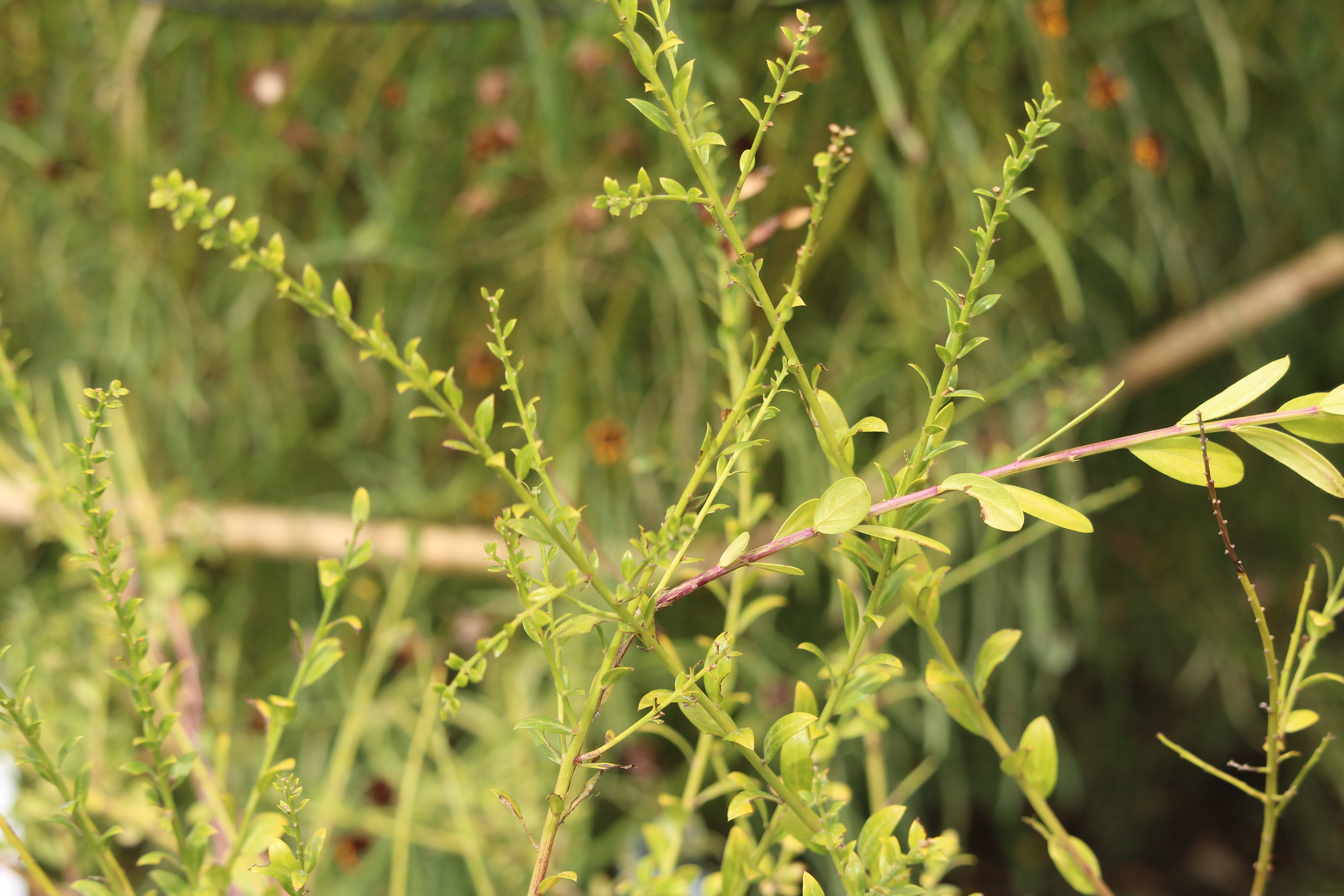
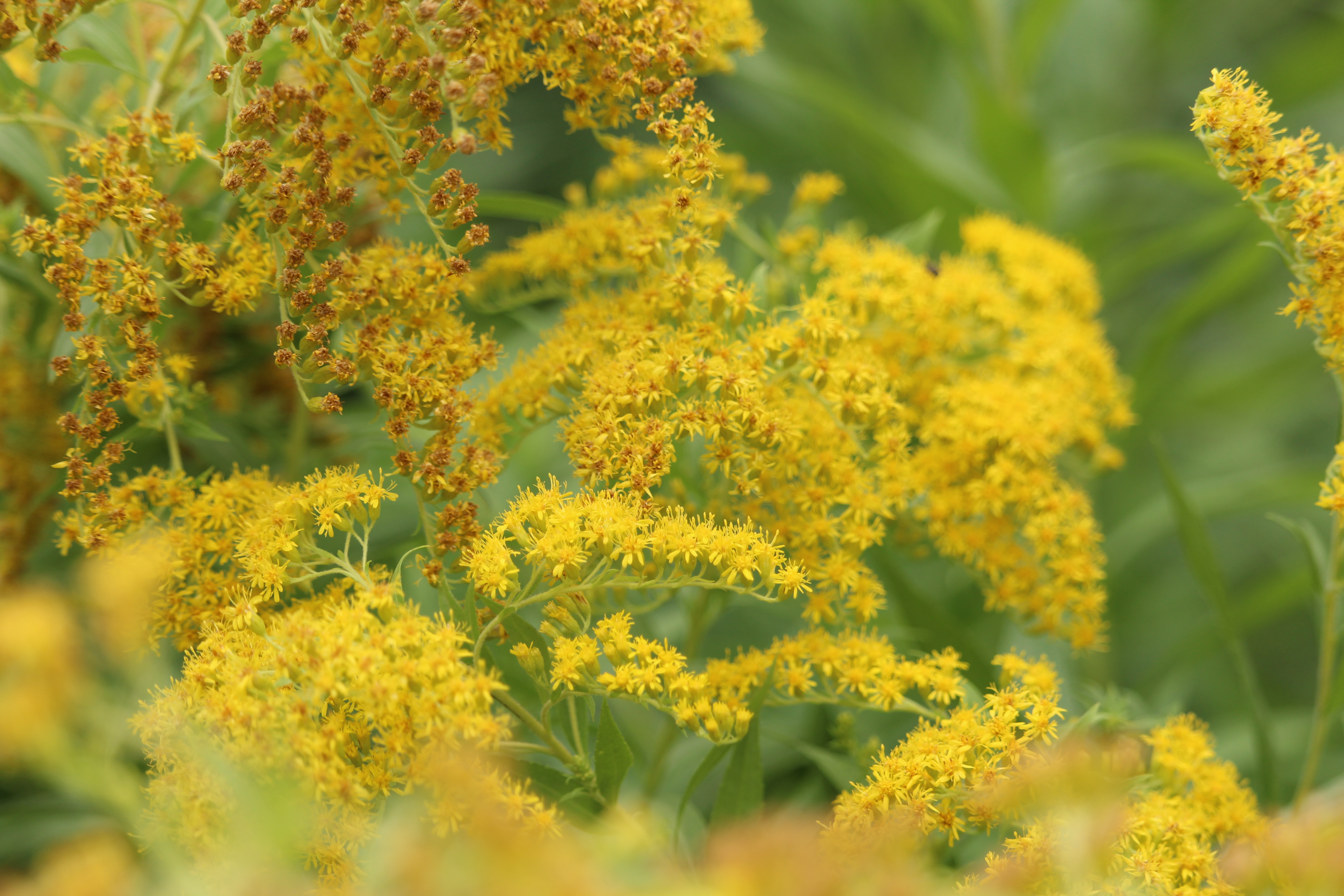
Here is a glimpse of the many plants that “make” yellow:


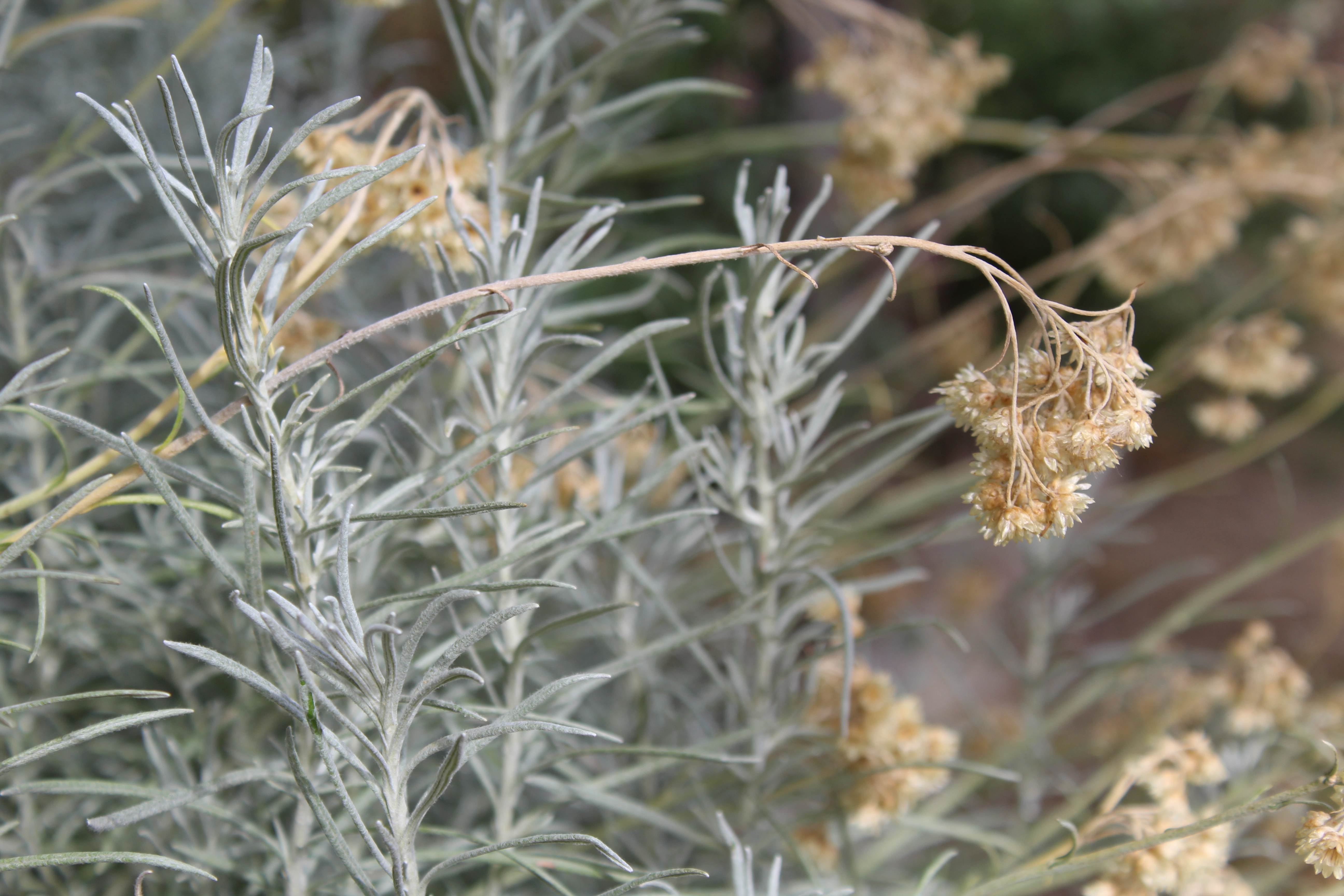
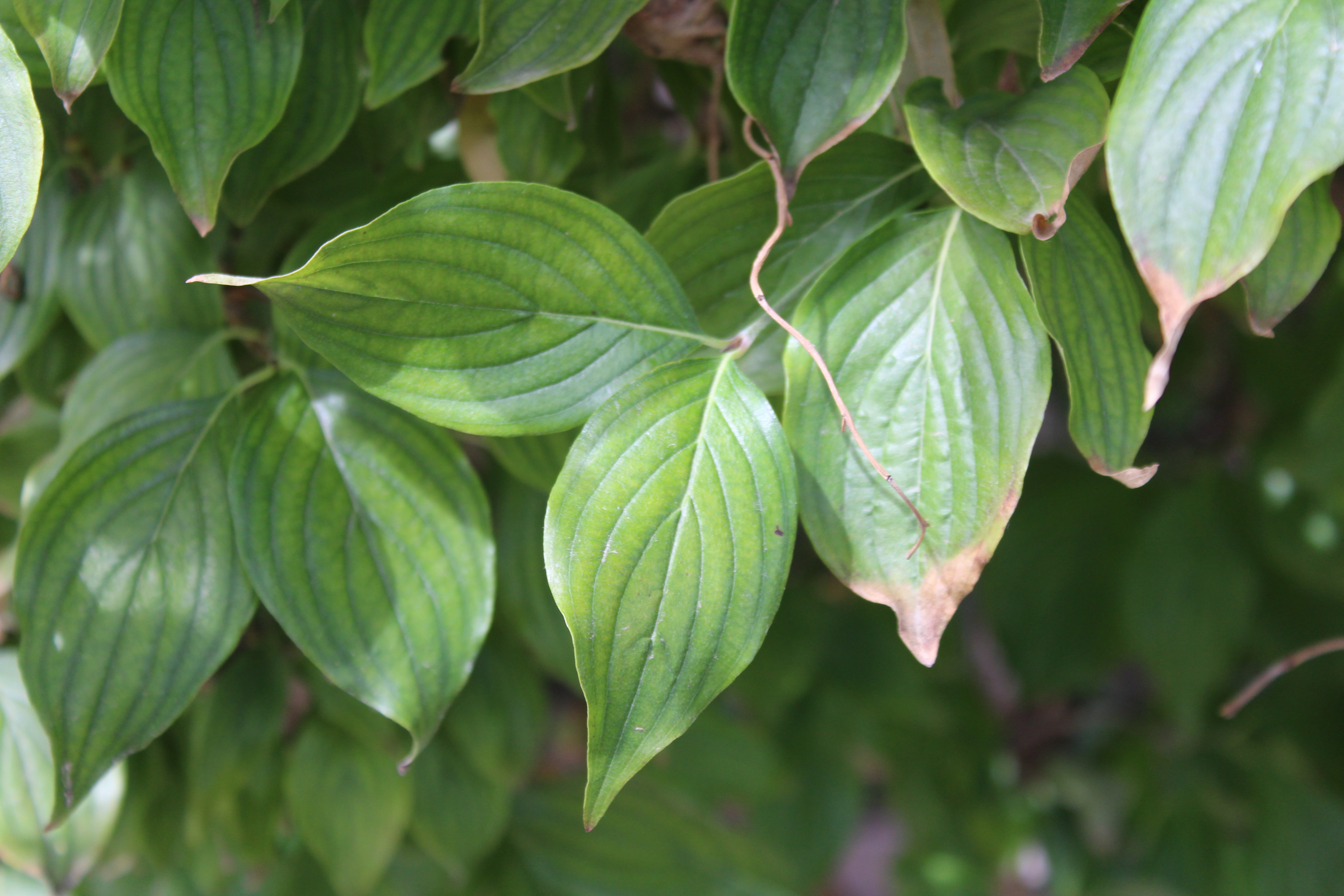


Red, a prized color since the dawn of time
This is a shade of importance because it was the first that man worked with in both dyeing and painting. A strong color, it symbolizes anger, war, or strength. Blood is red and represents life or death. In opposition to green, red evokes danger or the forbidden. Alone, it is a sign of power and wealth. With red, everything is possible. It catches the eye so much that it can convey any message.
The red dye, anthraquinone, has been used for a very long time in France thanks to Madder notably cultivated in Provence. Then redwoods originating from America or Asia came to compete with it. Another asset for France lies in the village of Lauris, known for its harvests of the Kermes kermès vermilio cochineal, a small parasitic insect of the Kermes oak from which it takes its name. Harvesting by hand was arduous work. After grinding, the insect gives the scarlet red known as vermilion. When harvesting stopped, the cochineal disappeared. The Nopal cactus cochineal (dactylopius coccus) was discovered and took over. However, it does not give the same dyes. This one gives a pink-red (carmine red) which is a food coloring used today in charcuterie. It is found under the label E-120. Not having seen any in the garden, I will focus instead on red from plants!
Dyer’s Madder not to be confused with wild madder, is the red plant par excellence. It is particularly valued because it is the only plant to give a truly pure red that is also fast to light and washing. Its roots are used (which are larger than those of its wild counterpart); they are dried and then ground.
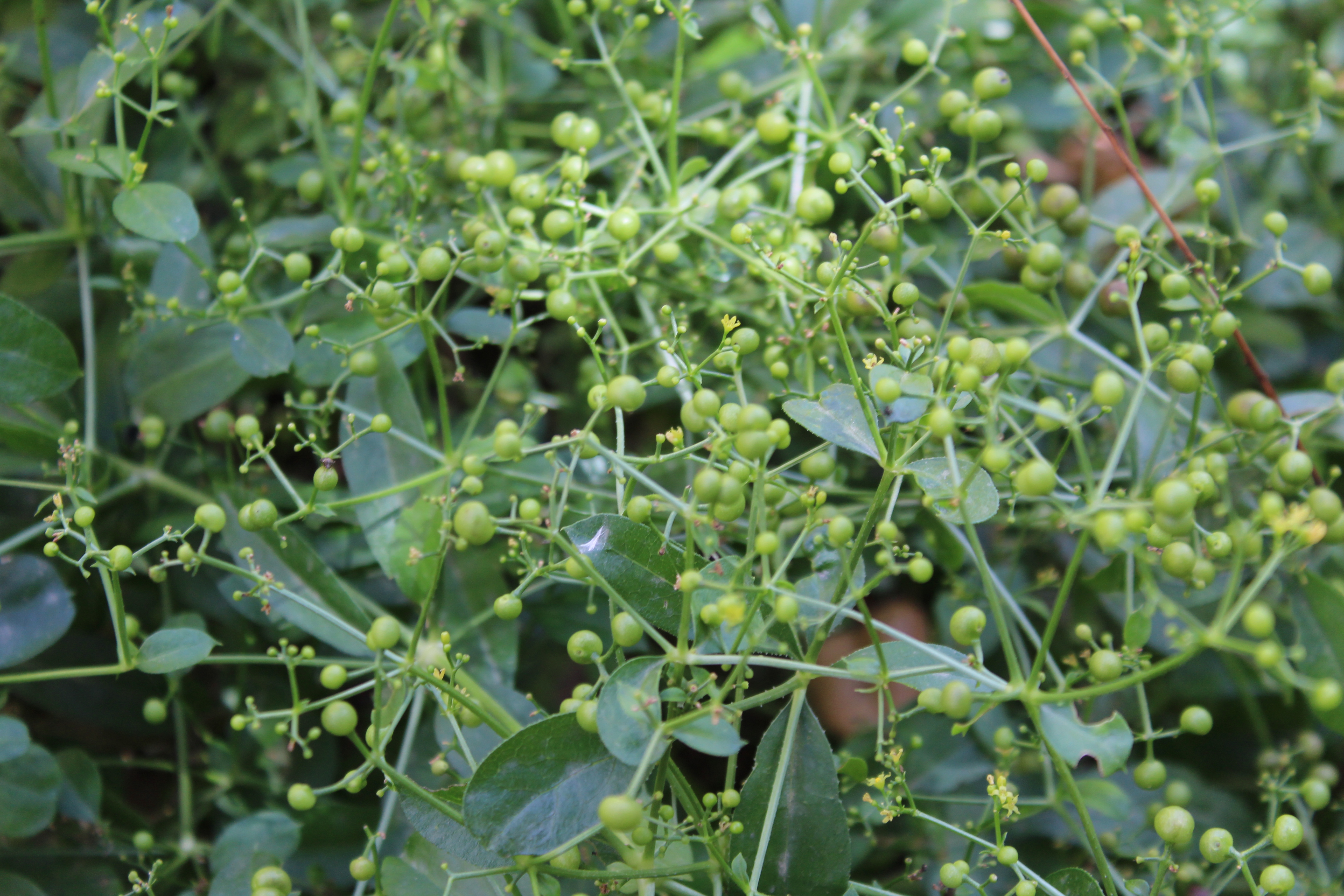
While red is relatively easy to extract and of high quality, cultivating the plant requires a well-orchestrated rotation. Since the root is used, the entire plant must be pulled up to extract its coloring power. Furthermore, the roots can only be harvested after 3 years in the ground. One must therefore be forward-thinking and replant regularly by transplanting root pieces or using seeds for sowing.

After long-term efforts to cultivate the plant on French soil, Madder contributed significantly to the economic development of the Vaucluse department, which provided 65% of world production in the 19th century. In 1829, to stimulate madder production, King Charles X of France mandated madder-red trousers and kepis for the French army, which soldiers of the First World War would keep; madder has antibacterial properties, protecting our ‘Poilus’ from gangrene. The success of Madder collapsed quickly during the second half of the 19th century: soil exhaustion, combined with competition from synthetic alizarin, caused production to decline rapidly, and by 1880, no madder fields remained. Furthermore, the soldiers’ uniforms, considered too conspicuous in red, became blue in 1915. This definitively buried Madder cultivation in the country.
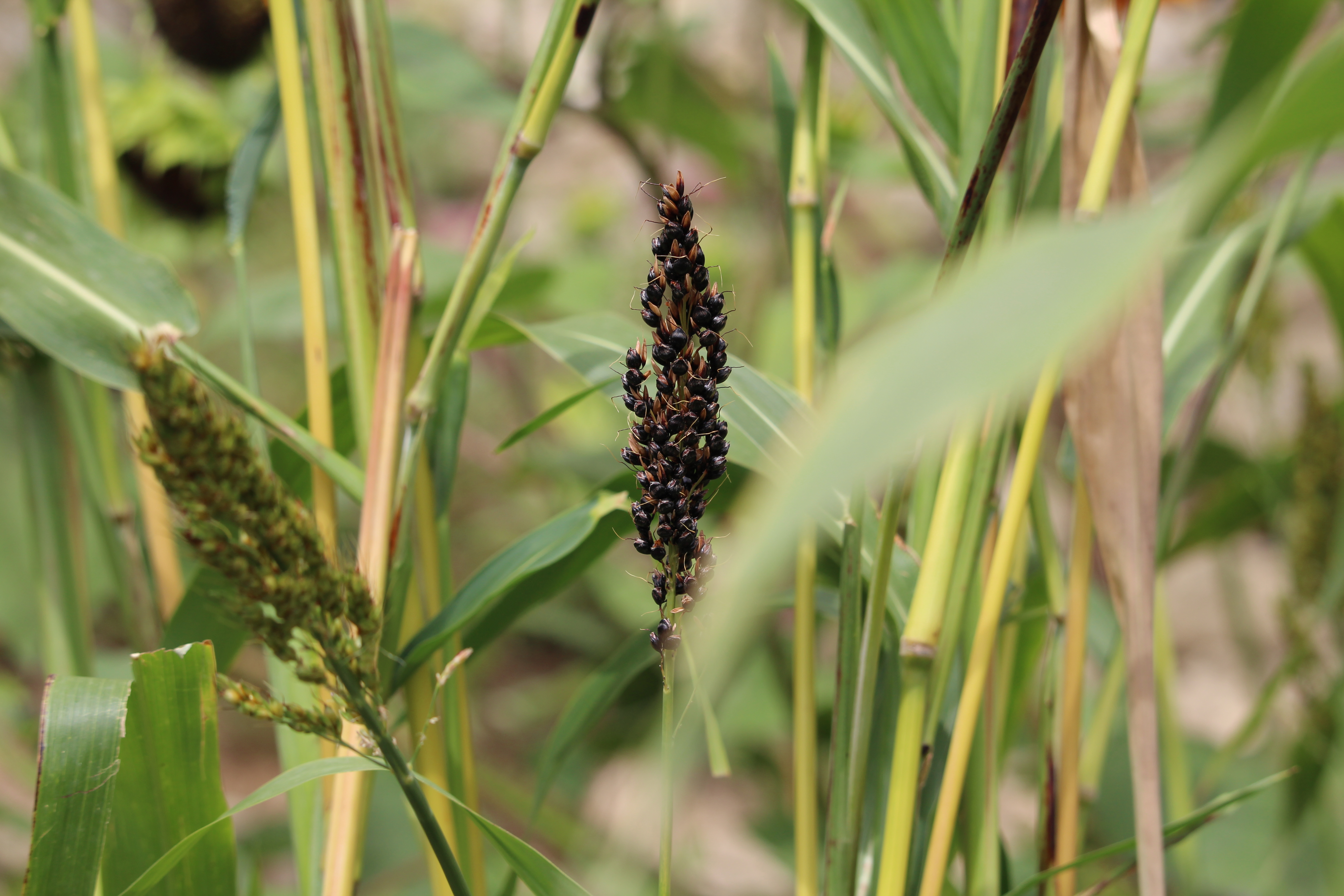
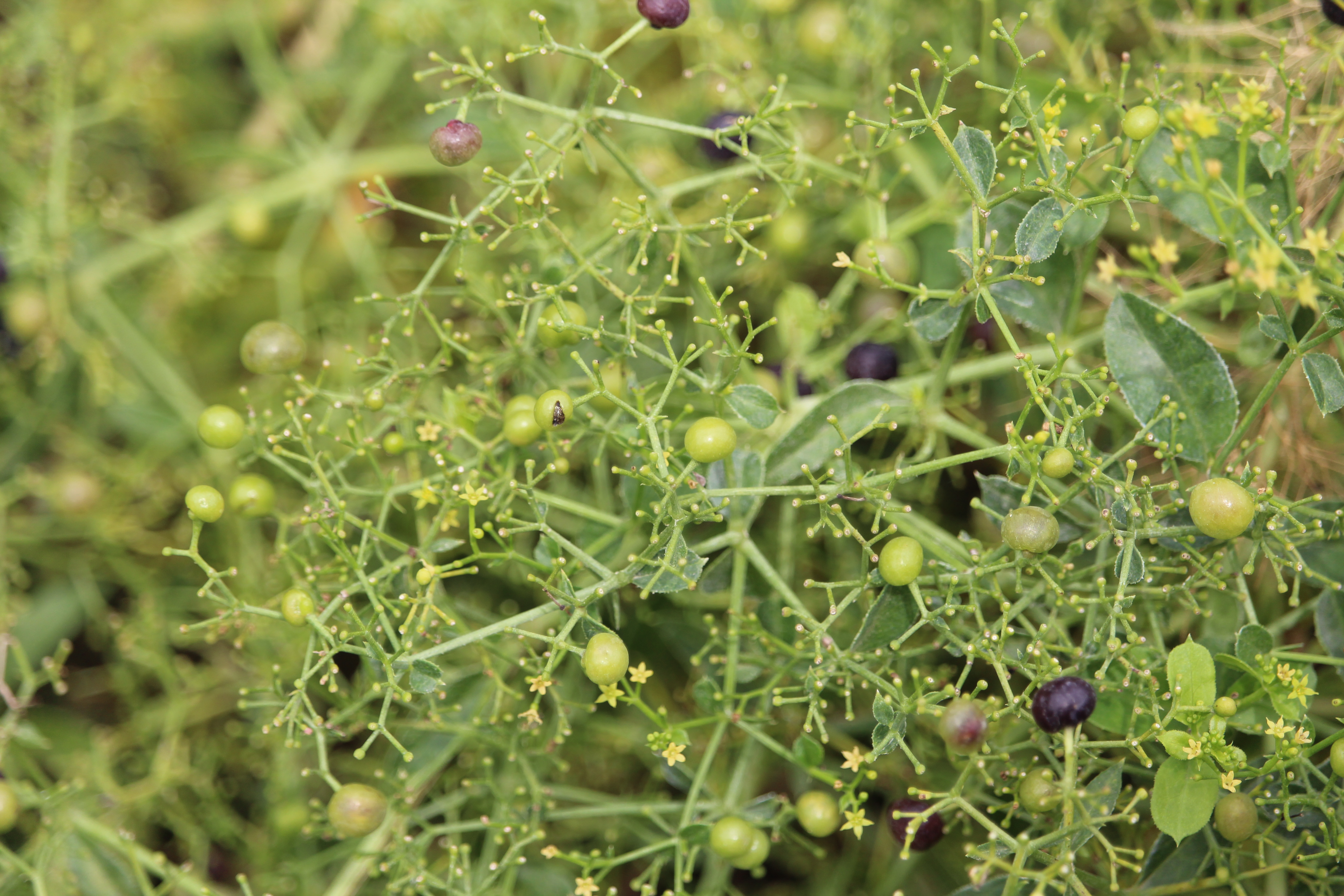
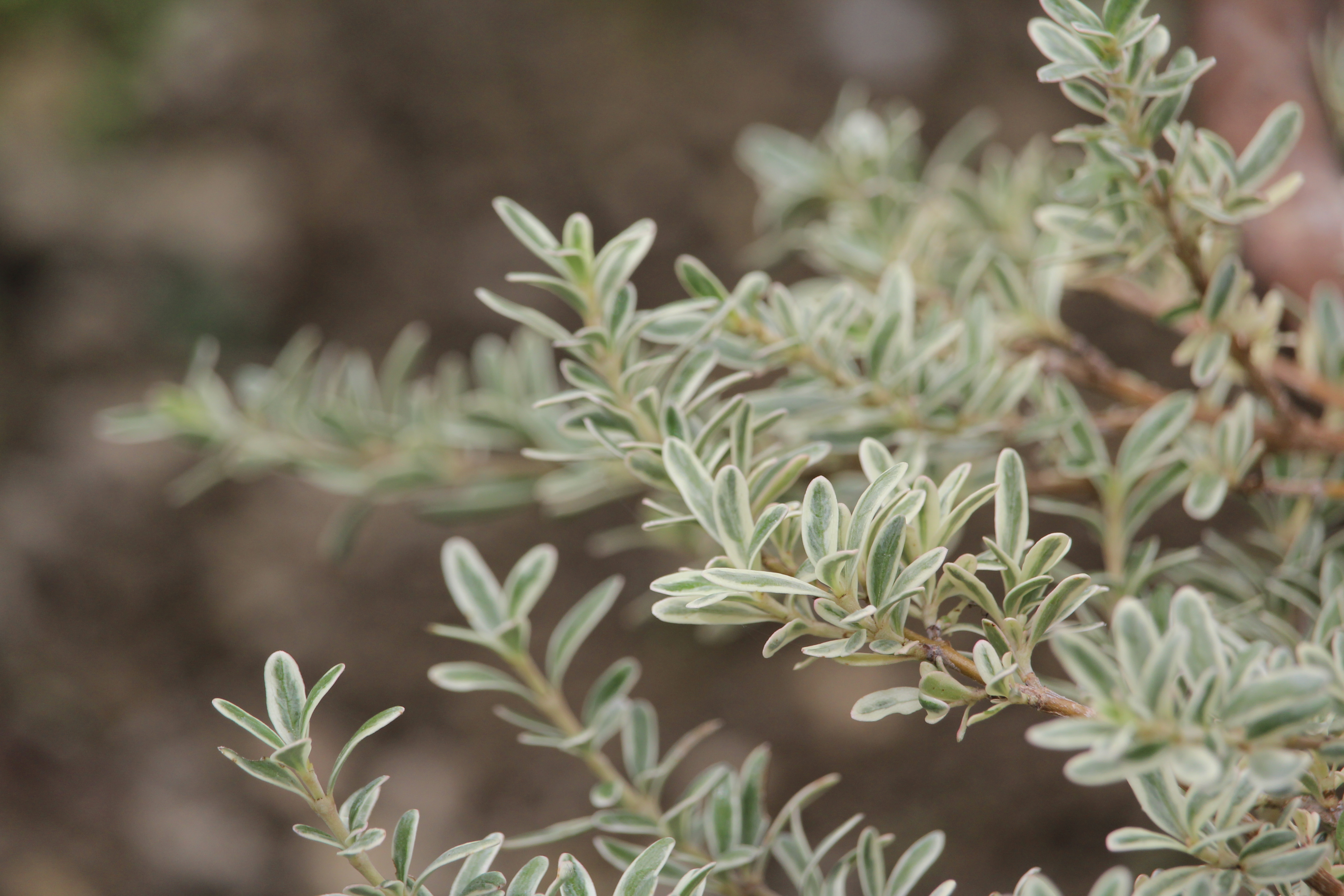
Other plants giving red:



A quick note on fuchsia
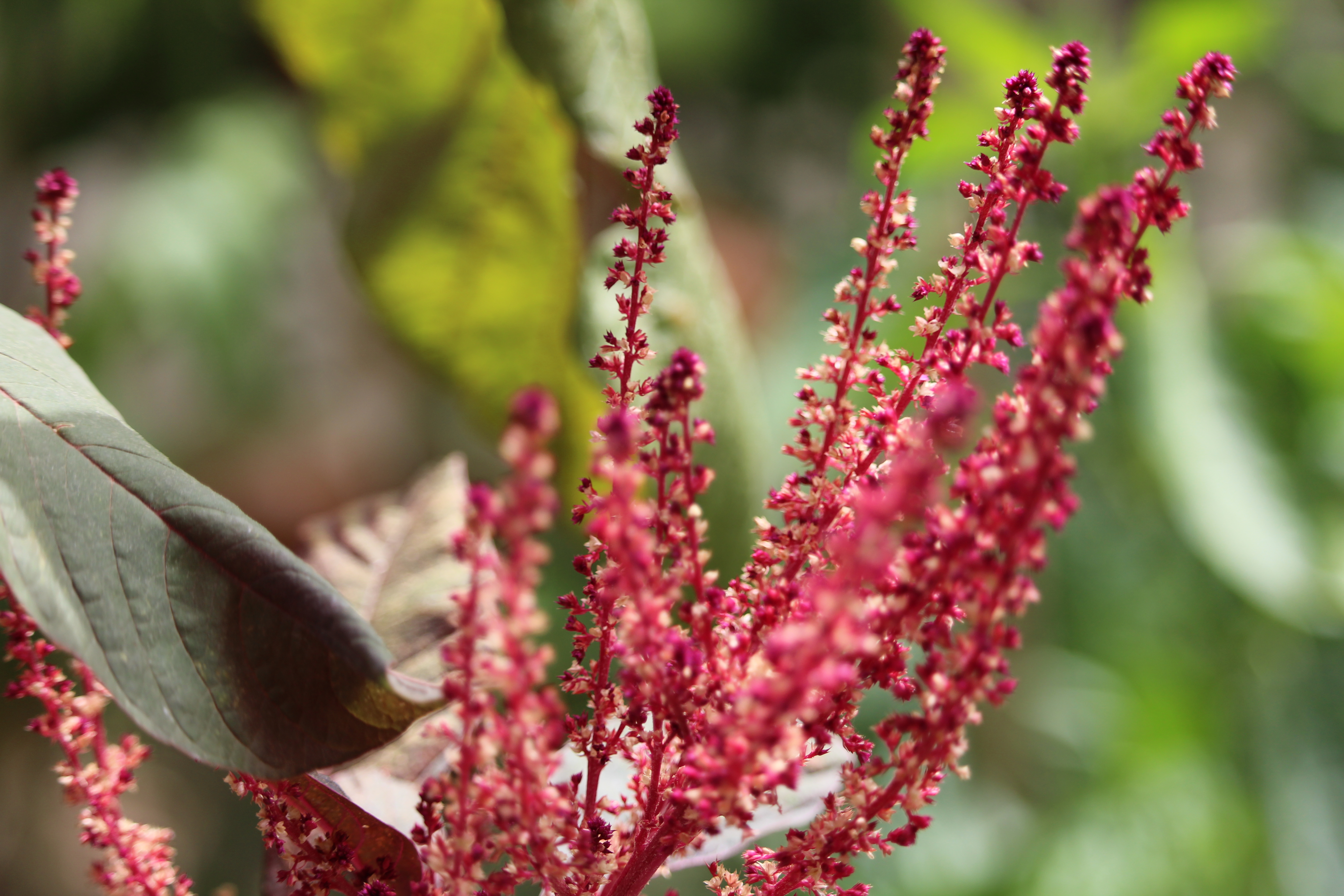
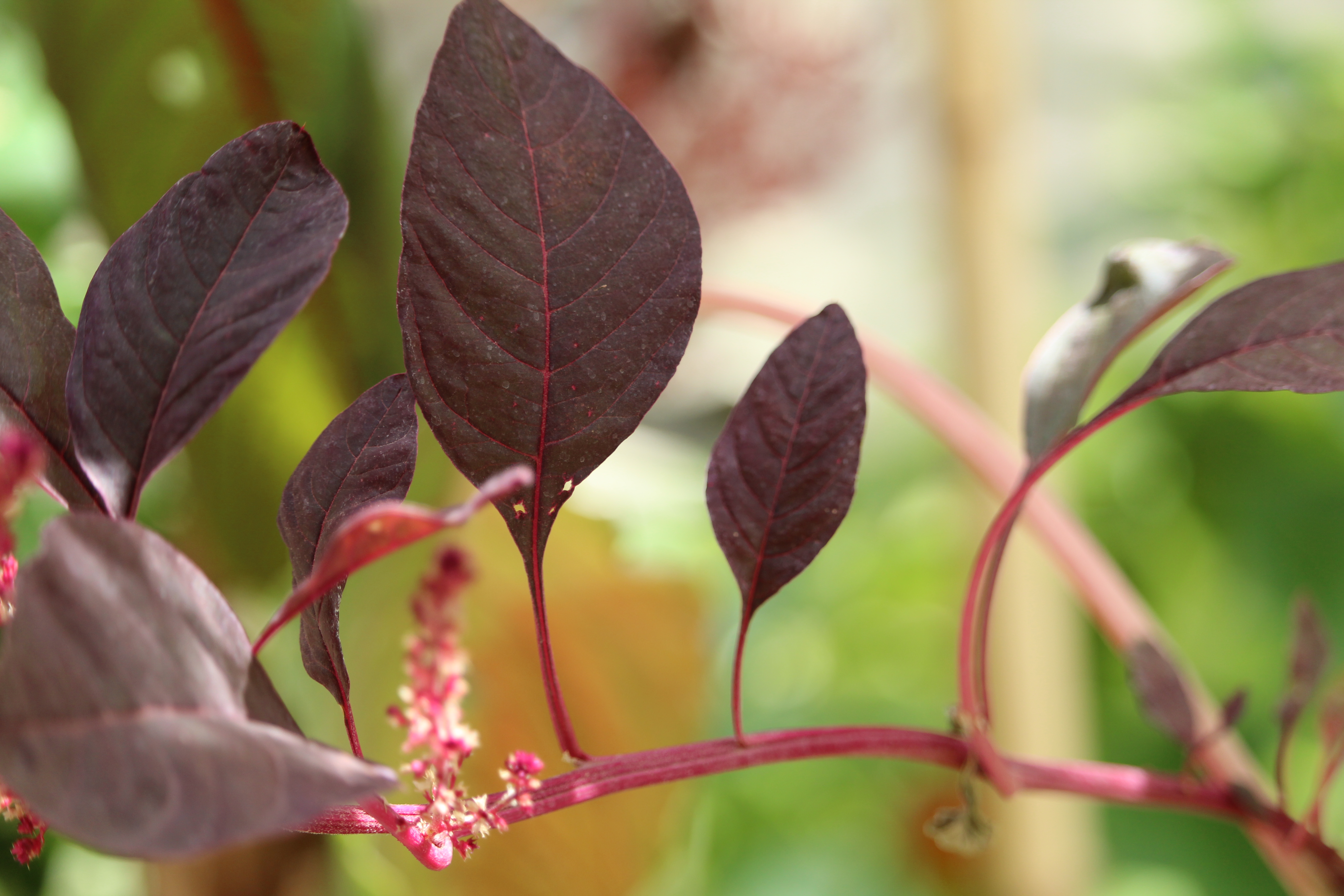
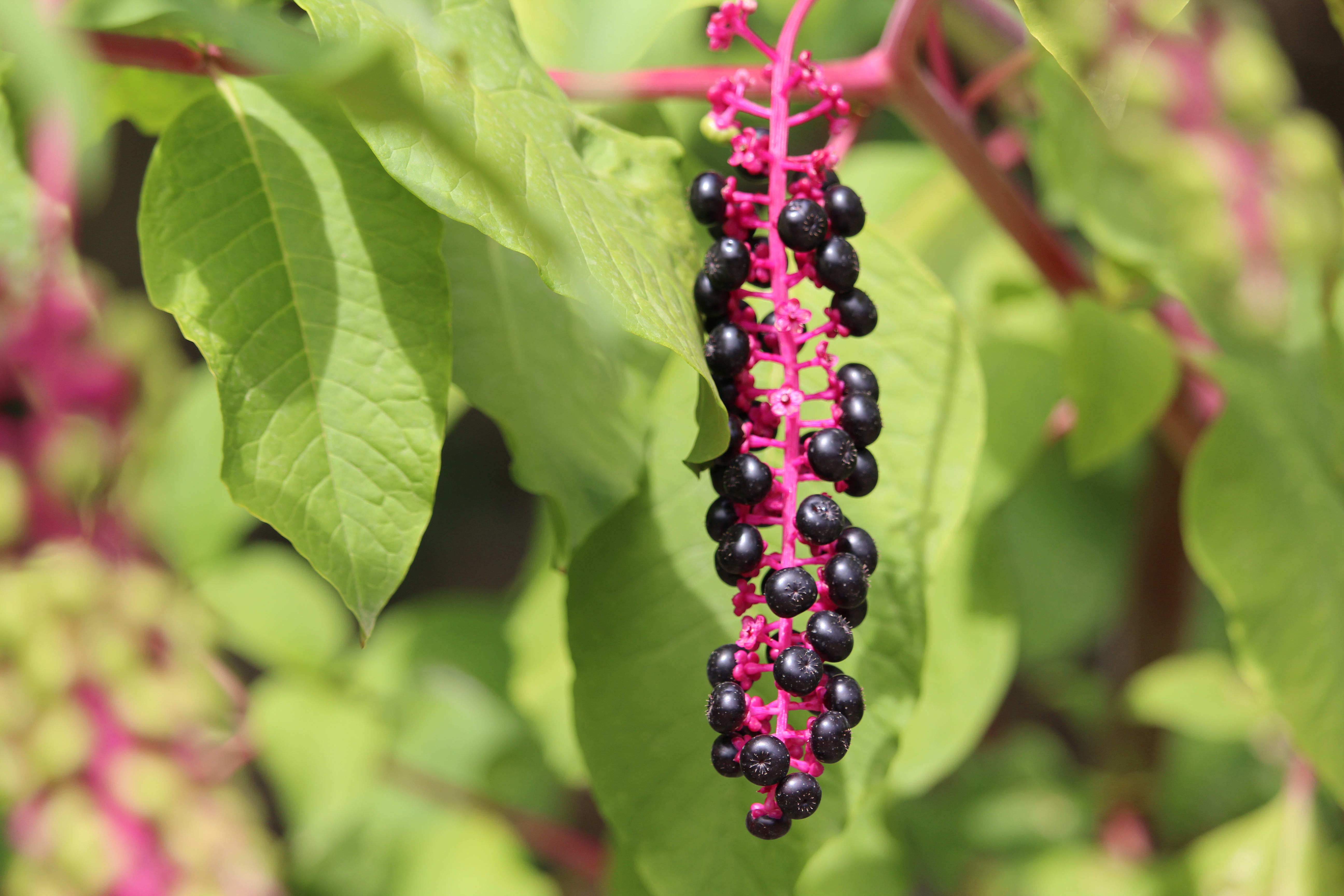
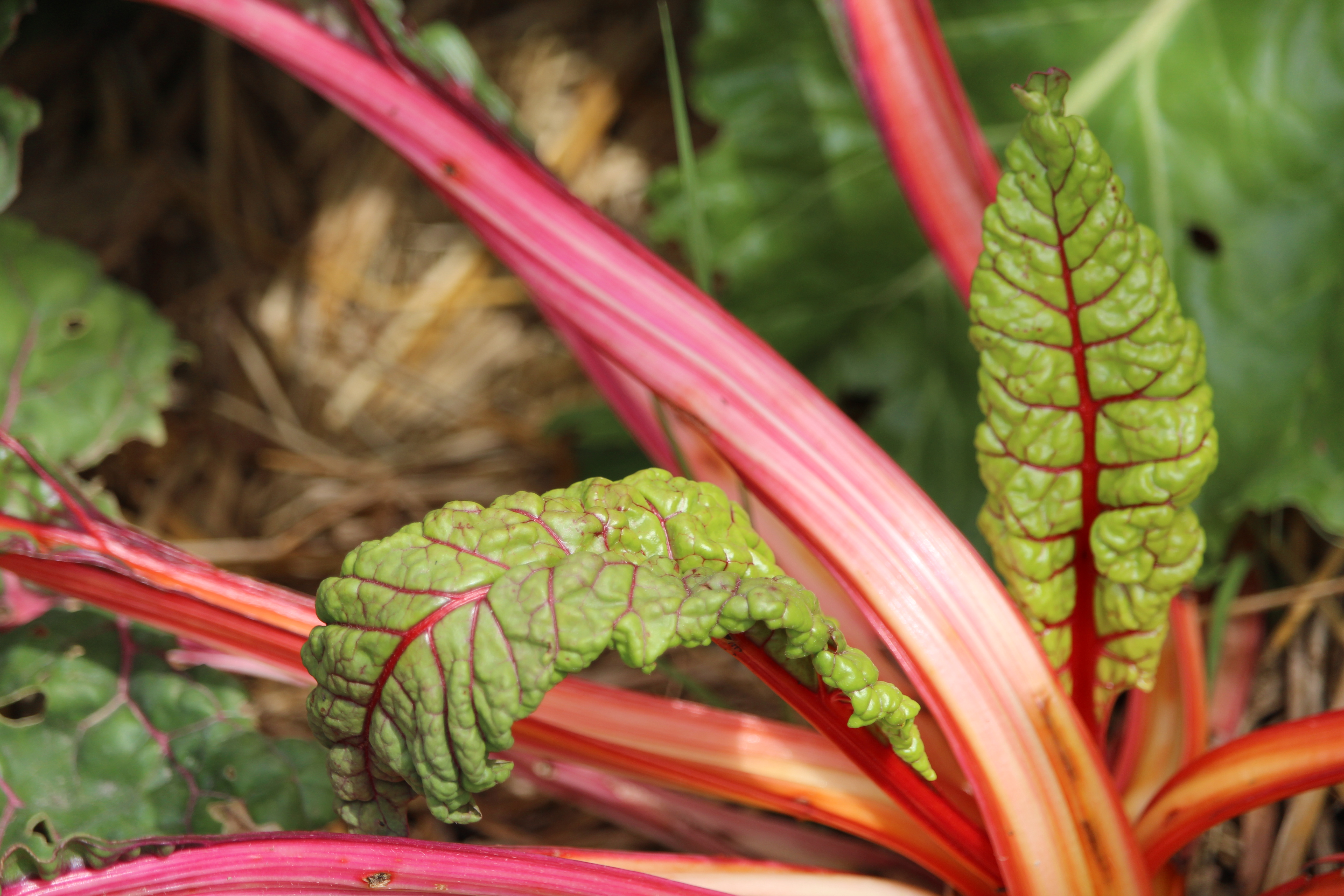
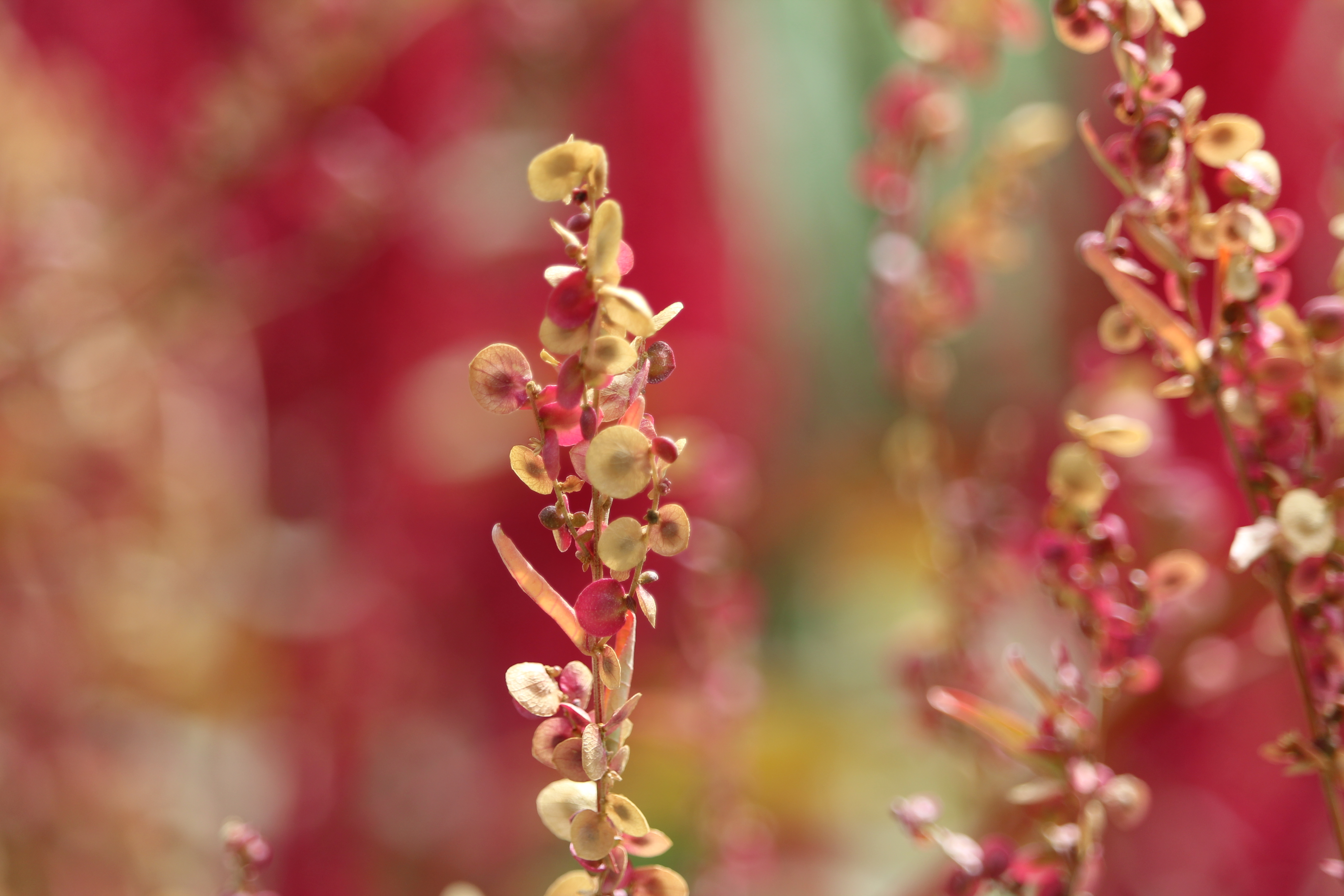
There is a square in the garden that blazes with fuchsia colors. It groups plants that possess pigments from the betalain family. They are little used in textile dyeing because they are very fragile. They are reserved instead for the manufacture of food colorings (group E-162). The shades obtained can be yellow or pink. I’ll let you admire the color saturation on the plants themselves!

The blacks and browns of tannins
The color of night and darkness, black stops time. The black cat brings bad luck, but in ancient Egypt, it was the color of rebirth and fertility (very black soil suggests fertile land). For us, death and nothingness are closer to what this dark shade evokes. It dresses mourning and ultimately aspires to sobriety and elegance.
Black is the absence of light, the absence of color. But in painting, black is a perfect mix of the 3 primary colors: blue, red, and yellow. This is how dyers first proceeded to darken fibers:
“Skillful dyeing on wool of dark blue with alum mordant, deep madder, and weld” (excerpt from the ‘black’ explanatory panel in the garden).
With the use of oak galls, we get closer to grays and browns. These are growths caused by an insect sting on oak trees.
It is Logwood that would first provide a true, uniform, and deep black.
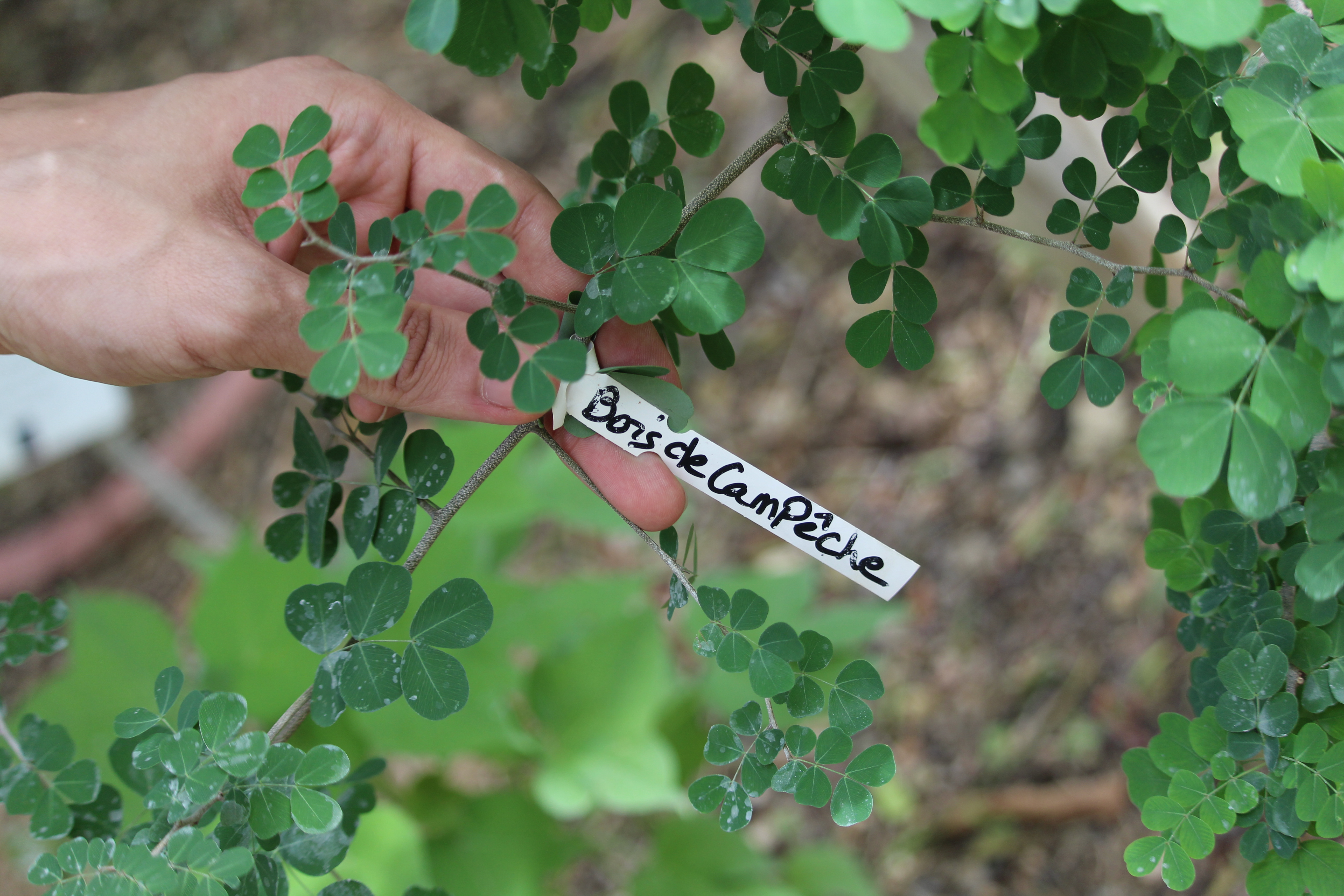
Blacks and browns are obtained from a well-known plant substance: tannins. Their purpose is to protect the plant from microbial attacks. They are also used in the preparation of leathers: tanning. Tannin molecules thus also protect leathers because they transform skin proteins into an insoluble product resistant to organic decomposition.
We also know them through their consumption in green tea or wine, tannins being present in grapes but also in oak barrels during wine aging.
Tannins are found throughout the plant kingdom, but trees in particular harbor the largest quantities. Wood, bark, roots, leaves, and fruits are all likely to contain them.

Depending on the process used and the plant chosen, the results will yield browns (warm or cold) or grays.
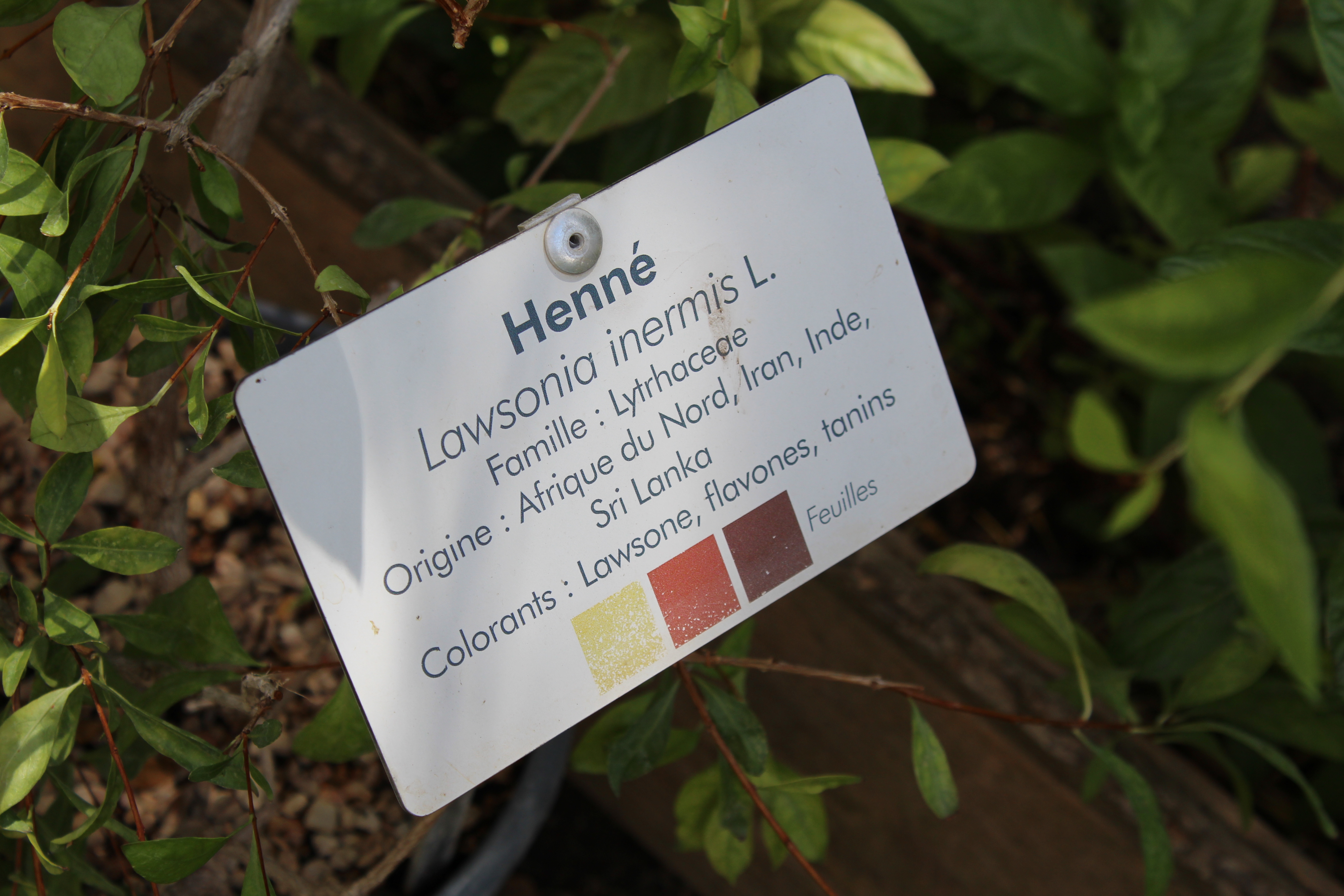
Henna, with the presence of other dyes in the leaves, will pull the brown toward yellow or orange.
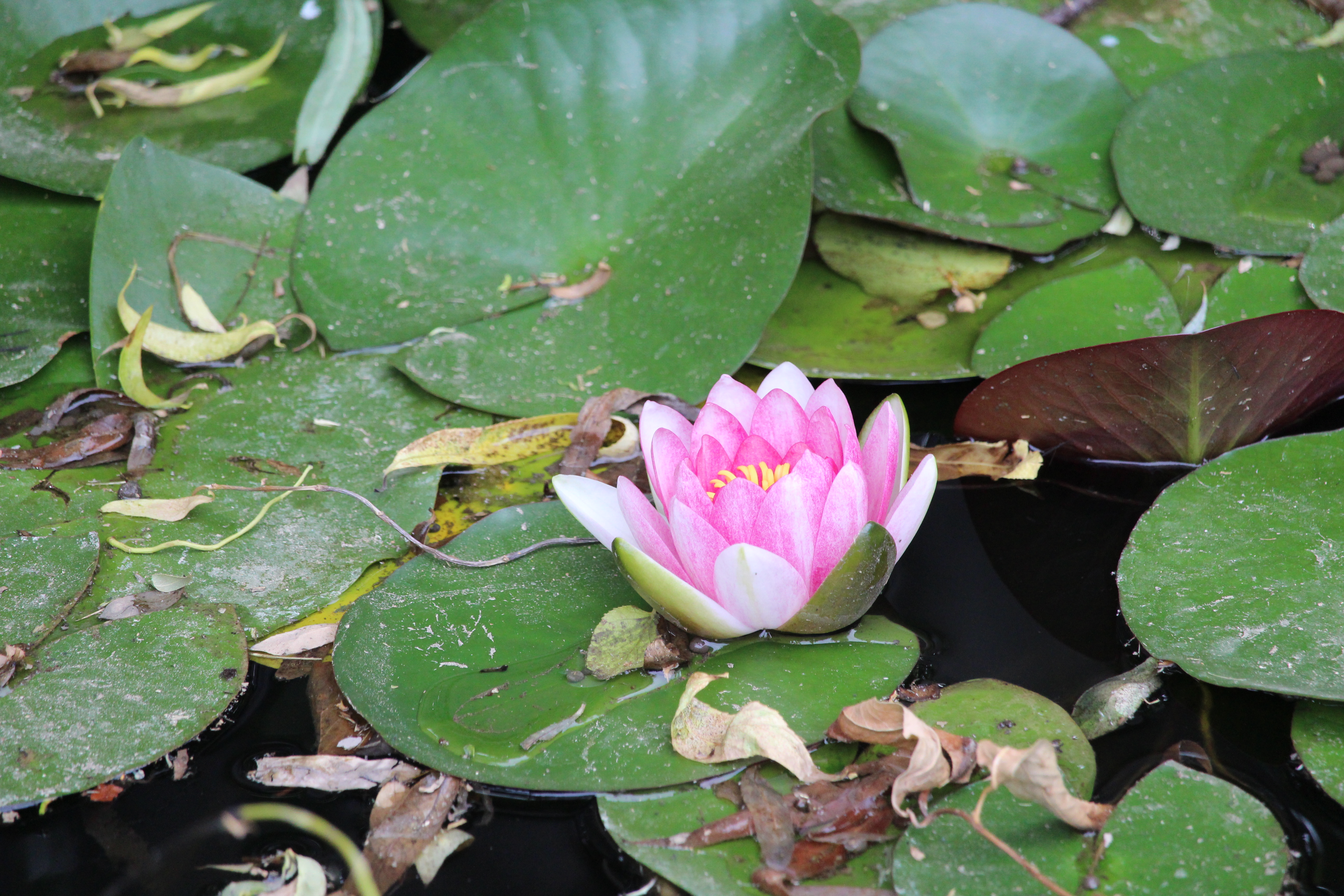
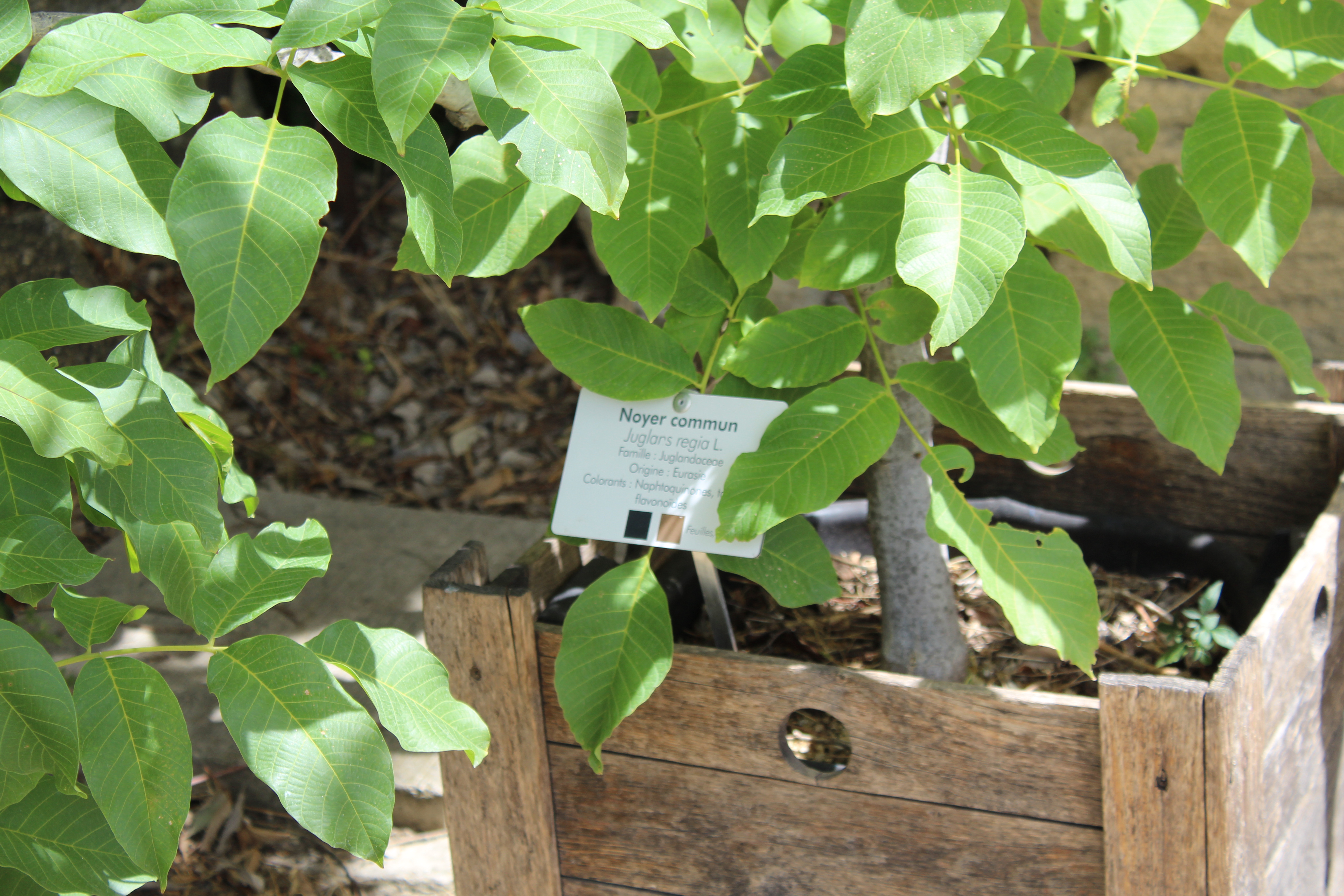
Logwood remains a standard for obtaining a beautiful black, but this is also true of the White Water Lily. Its rhizome, a type of root, was used in Germany to obtain a resistant black.
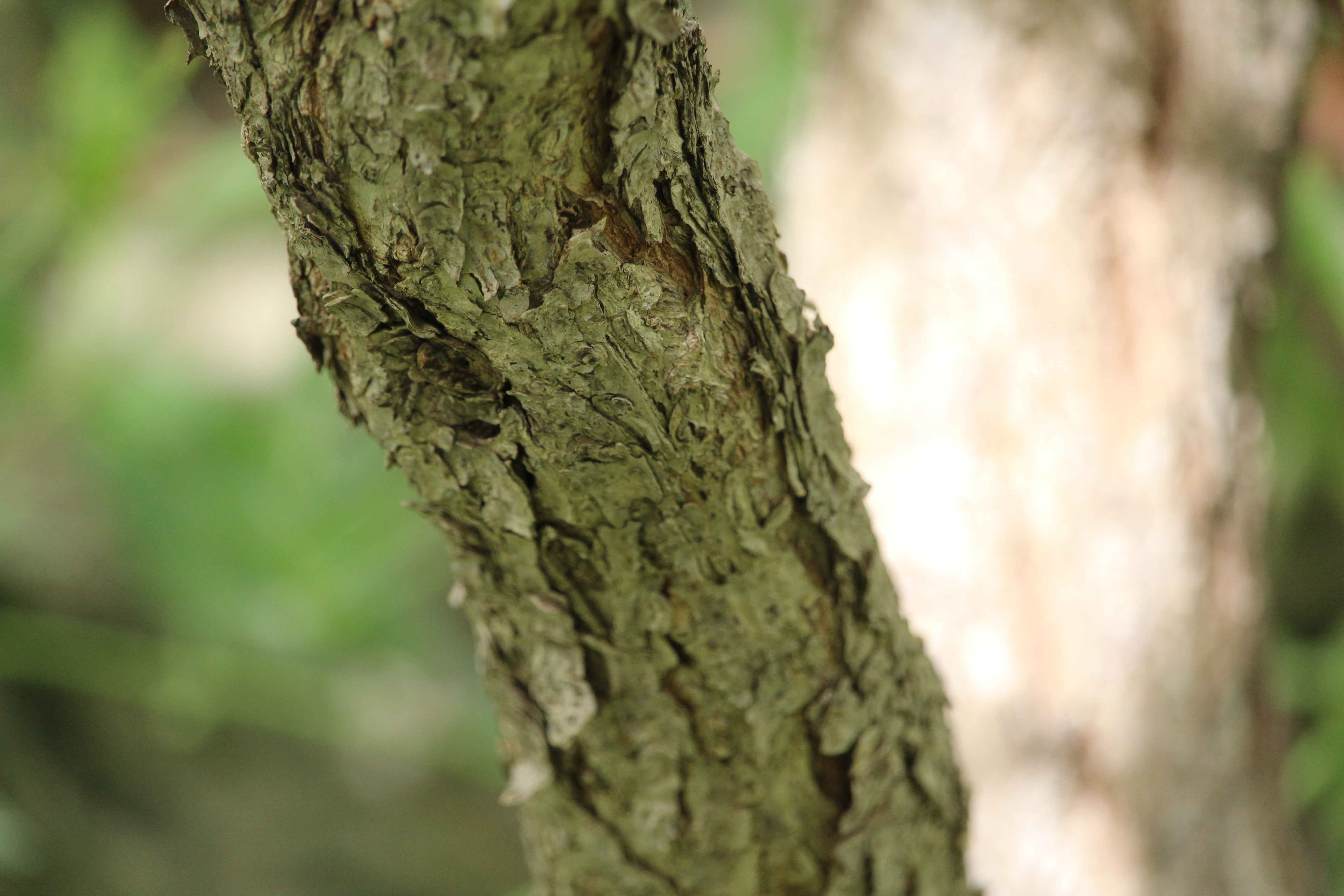
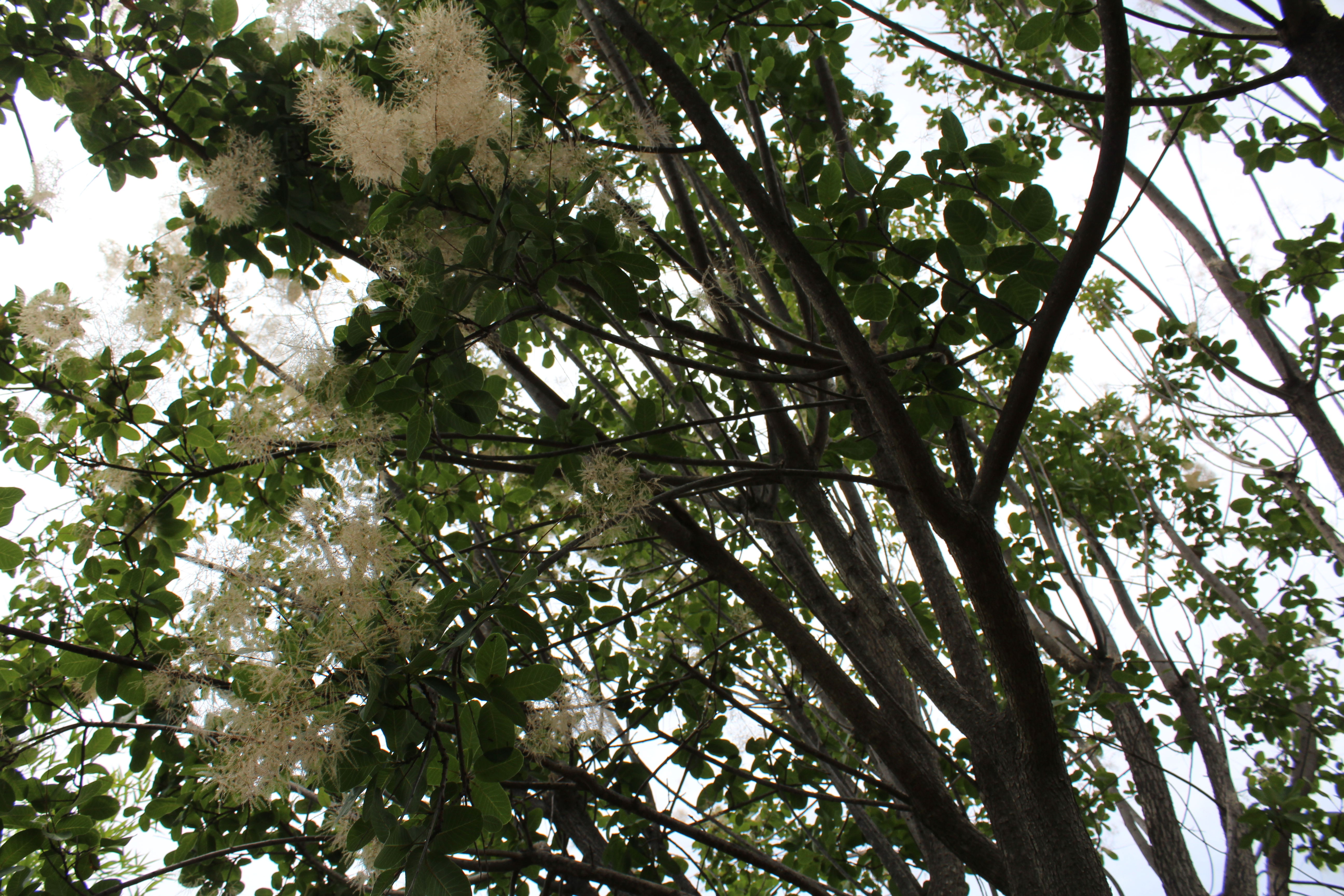
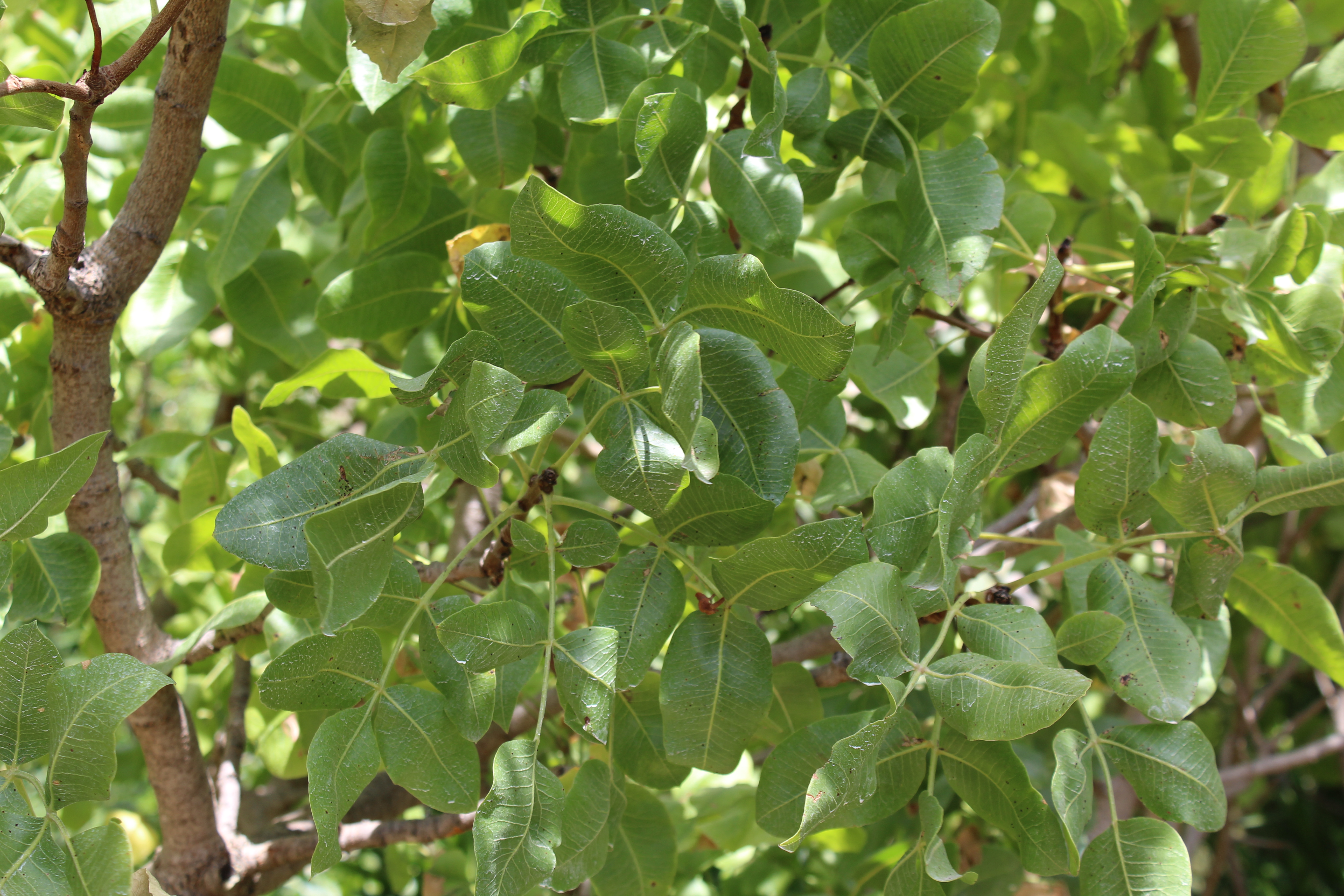
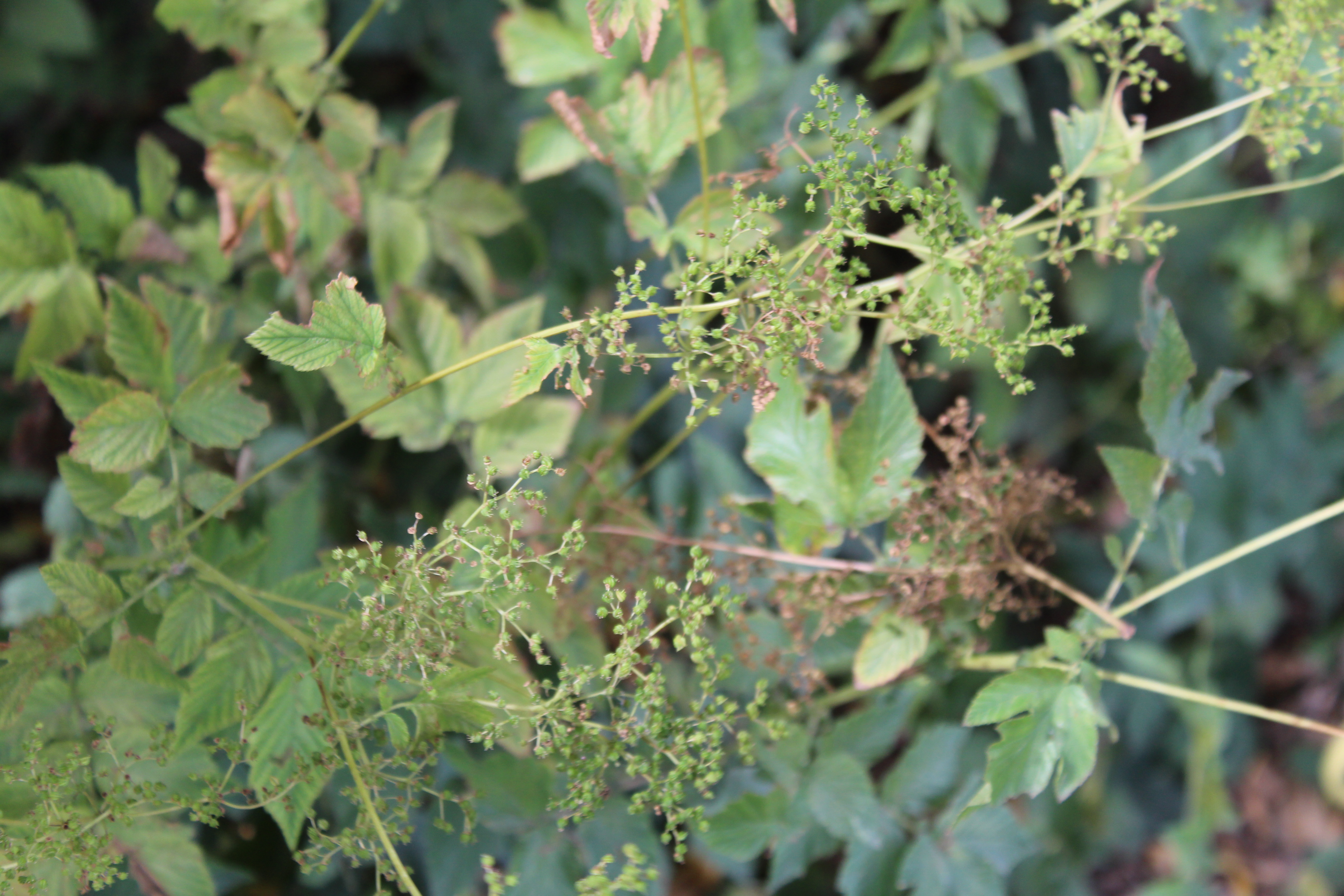
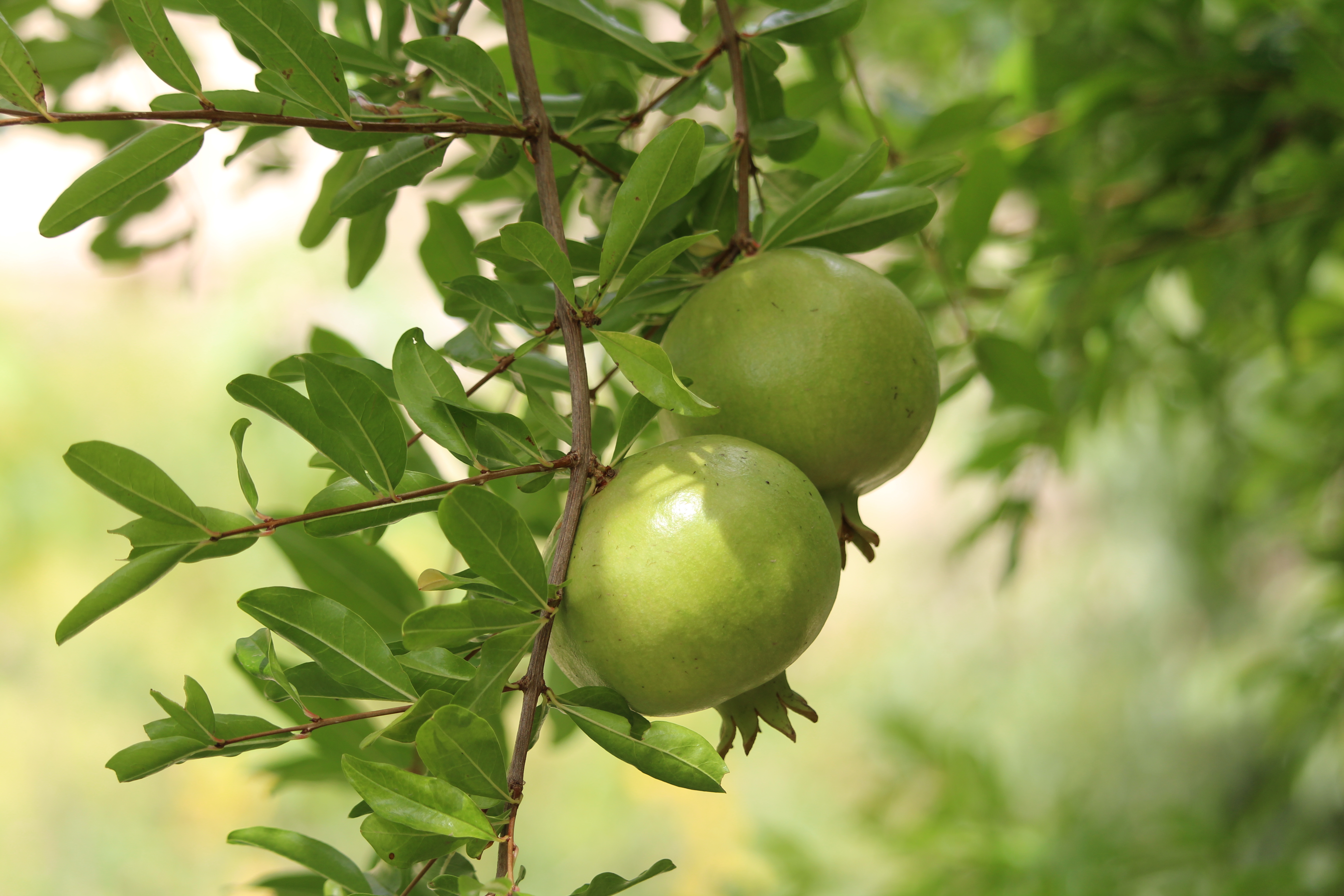
Other tannin plants:

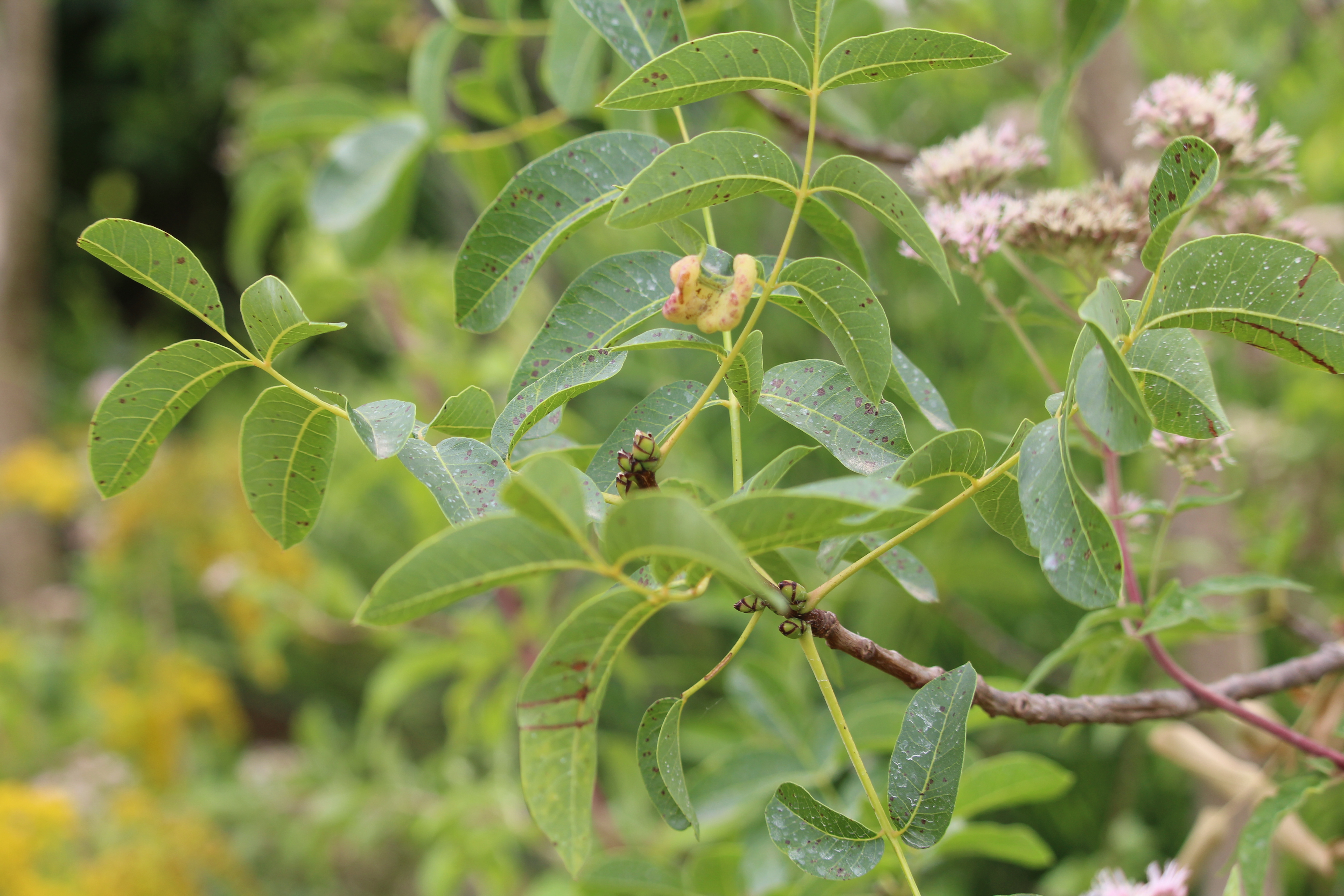
Leaving the garden…
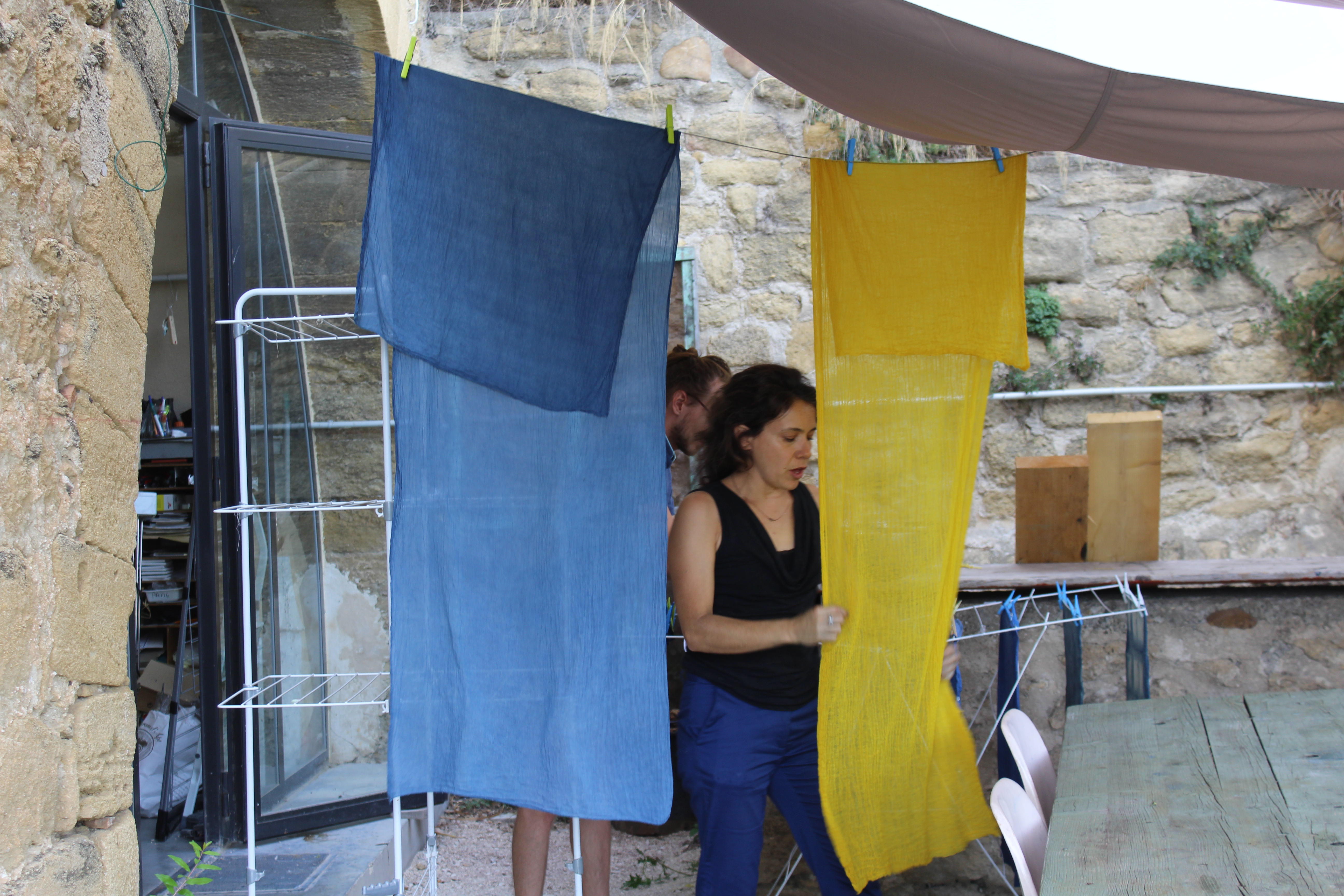
It is now time to announce the end of the visit. I hope this overview of the plants and knowledge that Couleur Garance offers through its terraces has pleased you and even made you want to go there! I’ll finish with proof that plants indeed have the magical power to color fiber: we were able to take a look at the result of a week-long dyeing workshop where 2 students had the chance to create a superb color chart.
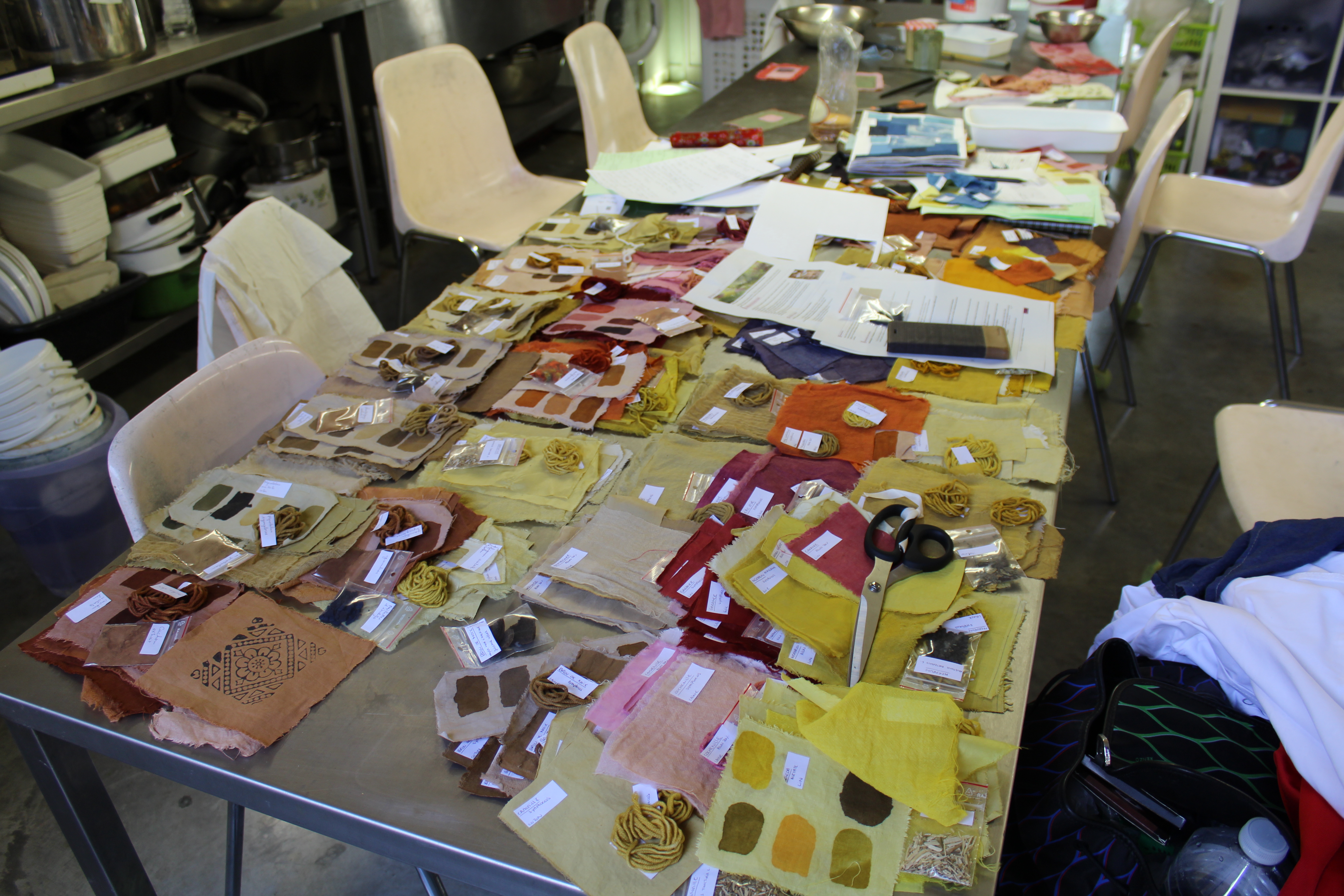
Lise Camoin, an artist and dyer who works for the association during the workshops, allowed us to approach the studio. A sort of chapel of plant-based color in my mind.

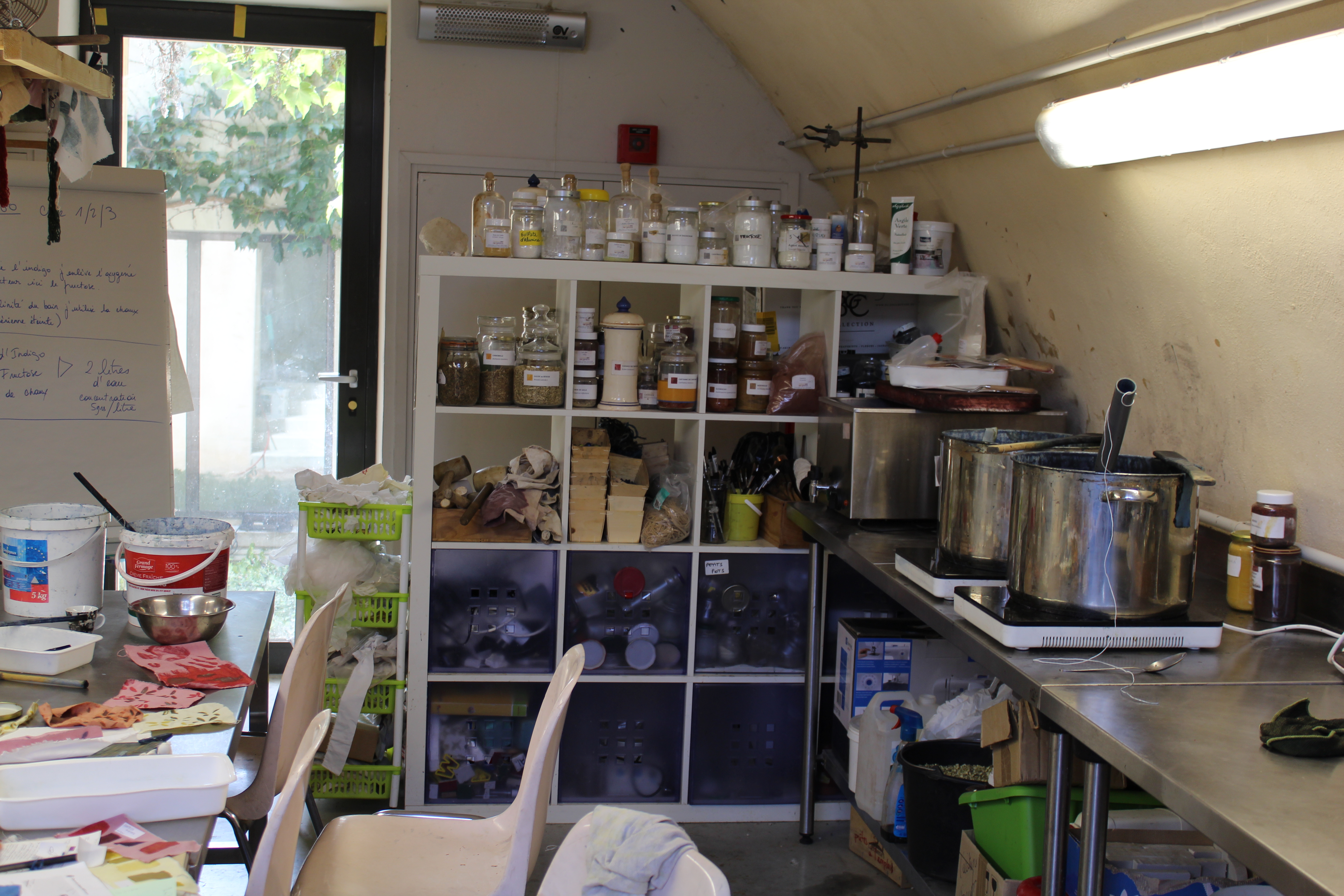

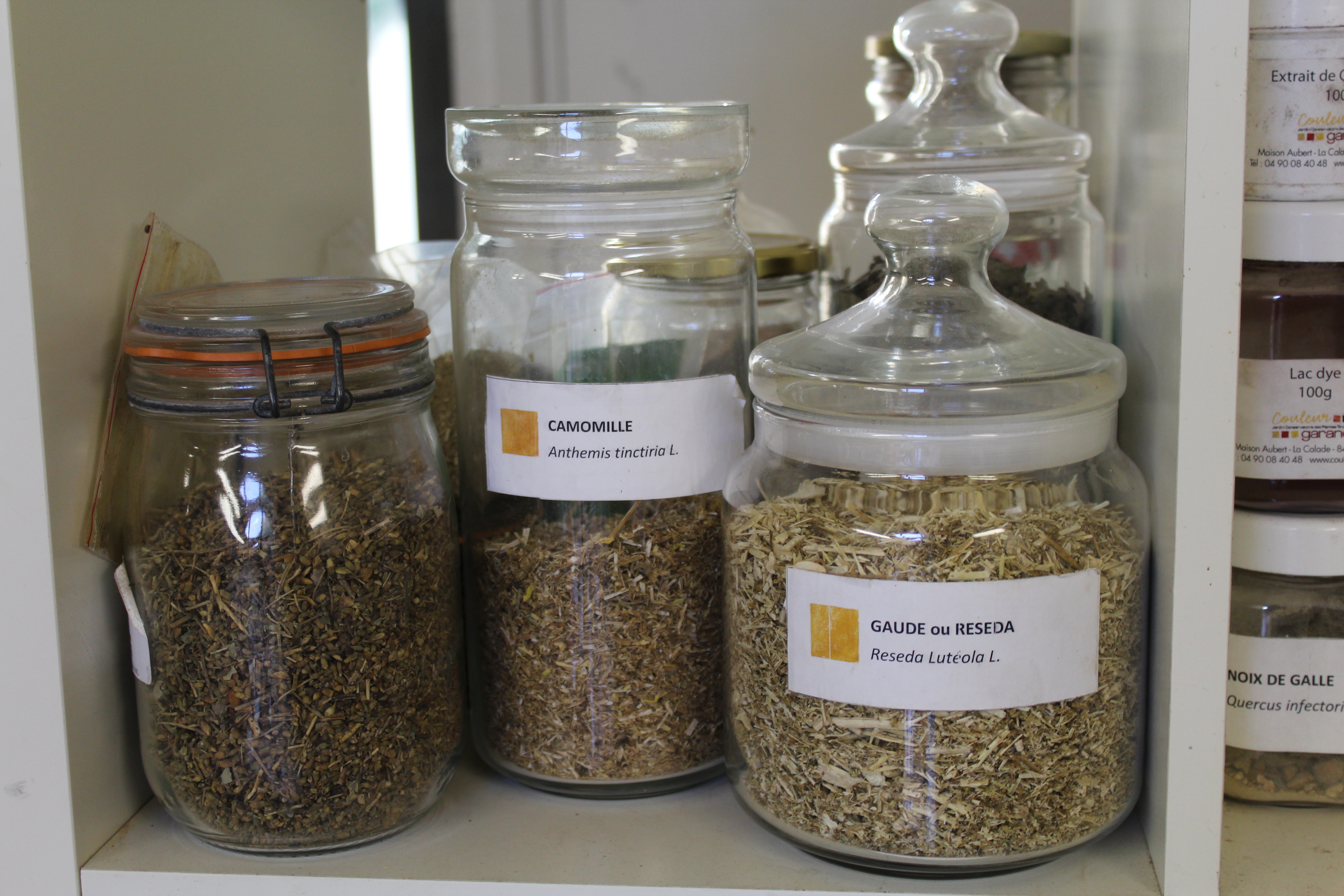
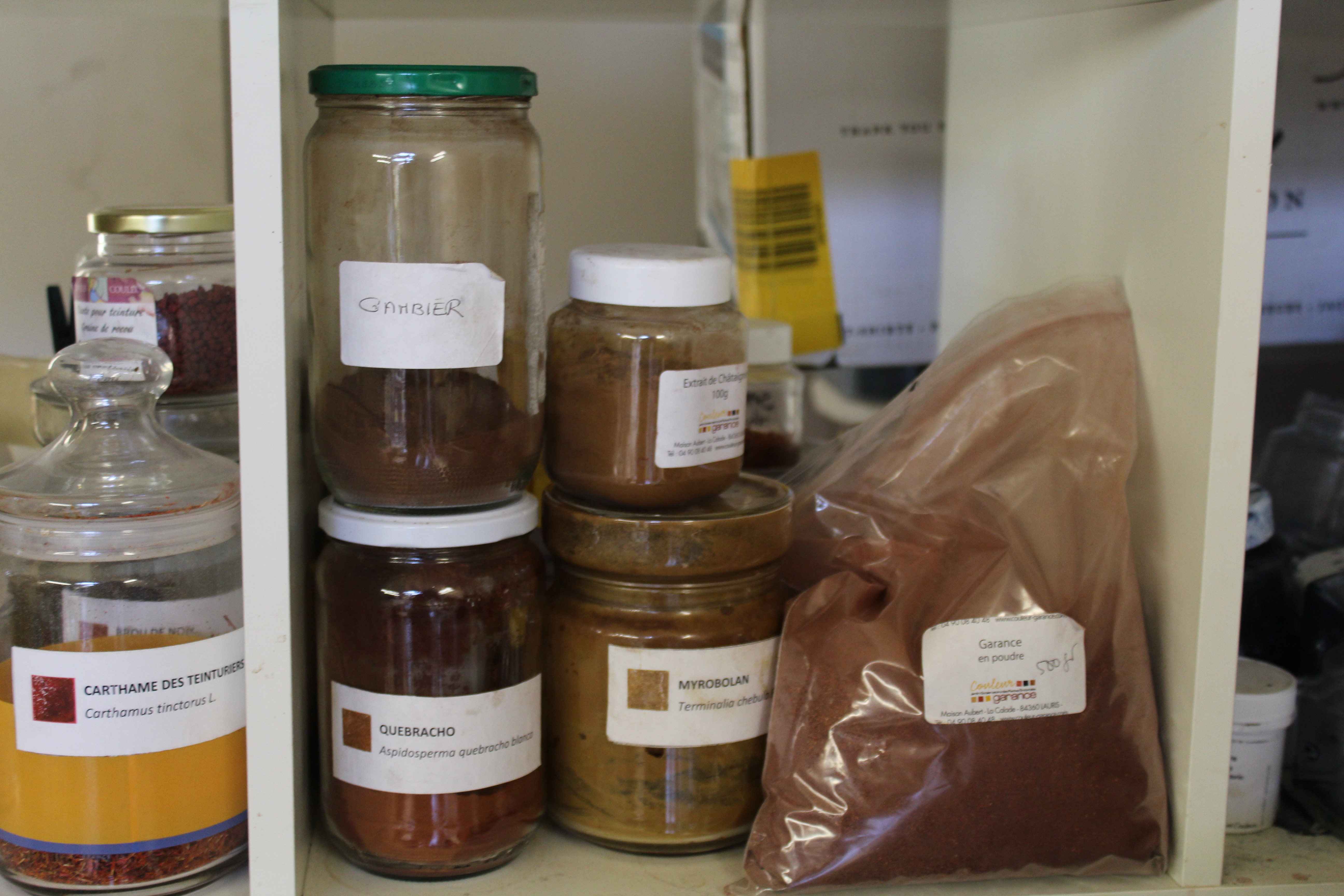
I thank her warmly for taking a few moments to talk to us about her work and for sharing her knowledge of both plants and dyeing. Our exchange allowed me, in particular, to clarify certain points in this article! Thanks also to Couleur Garance and notably Mathilde Christol, whose welcome and contact were very pleasant and also enriching.
With that, I’m off to enjoy the treasures bought in the shop…

Useful links and resources
websites
- Couleur Garance (+ YouTube videos)
- Lise Camoin
- Bleu de Lectoure
books
- Guide des teintures naturelles, plantes à fleurs, Marie Marquet, Belin, 2011
- De la garance au pastel, le jardin des teinturiers, Michel Garcia, Marie-Françoise Delarozière, Edisud Nature, 1996
- The Language of Symbols, David Fontana, Gründ, 2004